
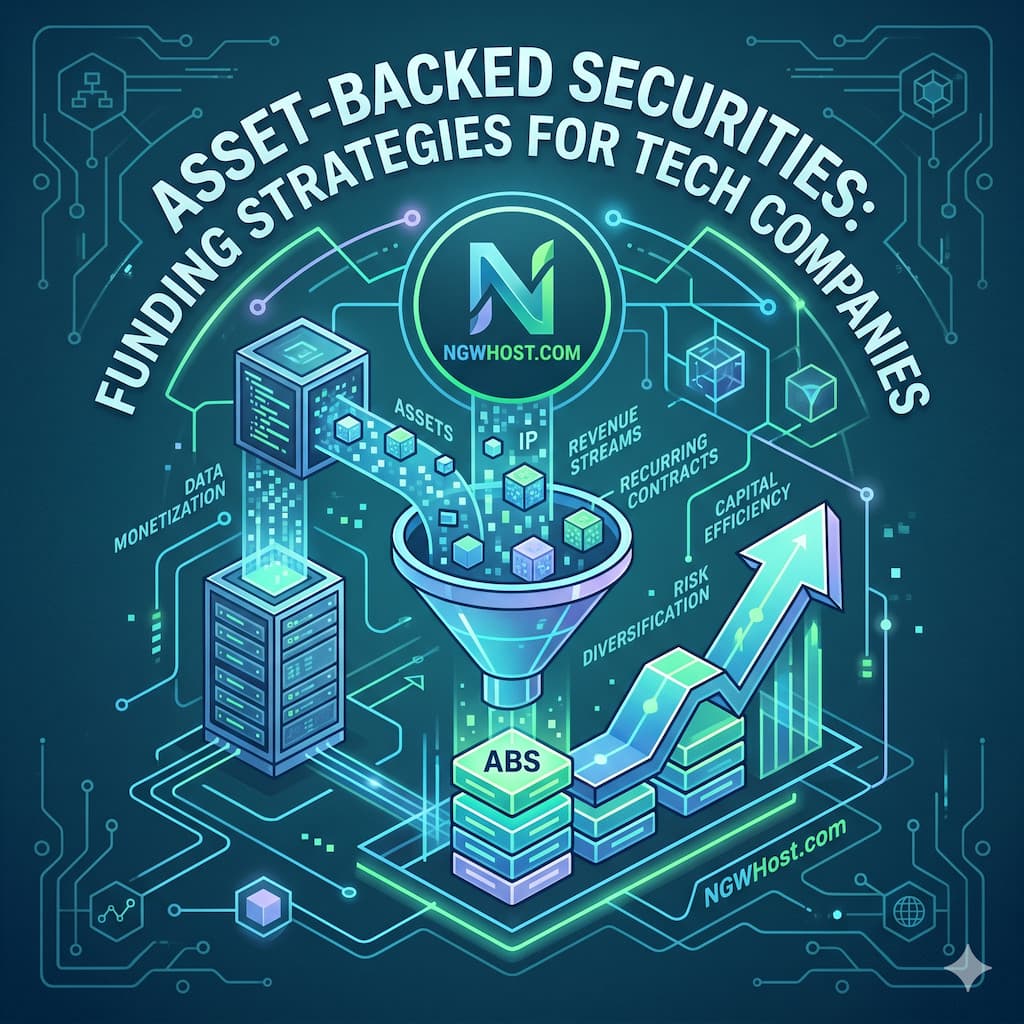
Asset-Backed Securities: Funding Strategies for Tech Companies
The macroeconomic playbook for scaling a technology enterprise has encountered a structural paradigm shift. As we navigate the complex capitalization environment of May 2026, the historic reliance on dilutive equity financing rounds, high-interest venture debt lines, or rigid convertible notes has hit a wall of economic reality. Tech founders, corporate treasurers, and financial officers are operating in a market that aggressively penalizes equity surrender at depressed valuations, yet demands continuous, heavy capital injections to fuel product engineering, scale data operations, and expand international market footprints.
Historically, tech startups and growth-stage scaleups viewed their assets through a highly restricted lens. They recognized the value of intellectual property (IP), proprietary codebases, and brand equity, but routinely ran into a wall when interfacing with traditional commercial banking systems. Legacy corporate underwriting parameters require physical asset coverage—such as real estate deeds or industrial machinery ledgers—to secure low-cost, institutional credit lines. Because technology companies carry assets that are fundamentally digital, intangible, and subscription-oriented, they were systematically funneled into high-dilution venture funding loops.
For the digital entrepreneurs, full-stack systems builders, and platform architects within the ngwhost.com community, structural inefficiencies are an engineering failure. We design cloud environments, database shards, and automated deployment pipelines to eliminate resource waste, maximize pipeline throughput, and optimize balance sheets.
Applying this exact same systemic discipline to your corporate capitalization requires a total transition from primitive fundraising habits to an advanced, institutional securitization framework: Asset-Backed Securities (ABS).
       THE 2026 TECH ASSET SECURITIZATION BRIDGE
┌────────────────────────────────────────────────────────┐
│     POOL OF PROGRAMMABLE INTANGIBLE ASSETS             │
│  (SaaS MRR, Tokenized RWA Leases, Marketplace AR, IP)  │
└───────────────────────────┬────────────────────────────┘
                            │
                            ▼
┌────────────────────────────────────────────────────────┐
│      ISOLATED BANKRUPTCY-REMOTE SPECIAL PURPOSE VEHICLE │
├────────────────────────────────────────────────────────┤
│ * Algorithmic Quality & Structural Churn Underwriting  │
│ * Cryptographic Smart Contract Cash Flow Tranching     │
└───────────────────────────┬────────────────────────────┘
                            │
                            ▼
┌────────────────────────────────────────────────────────┐
│   LOW-COST ACQUISITION OF INSTITUTIONAL PUBLIC LIQUIDITY│
└────────────────────────────────────────────────────────┘
By pooling, structuring, and securitizing your company’s highly predictable, digital recurring revenue streams, enterprise software contracts, or tokenized physical asset leases, your tech brand can bypass high-cost venture intermediaries entirely. This guide delivers a comprehensive, data-backed deconstruction of the tech ABS landscape, details advanced legal and cryptographic isolation techniques, and provides an actionable operational roadmap to secure institutional scale without surrendering a single percentage point of your company’s equity.
1. The Tech ABS Evolution: Turning Code into Structured Cash Flow
To successfully integrate asset-backed securitization into your company’s capitalization engine today, you must first dismantle the misconception that asset-backed debt is reserved exclusively for consumer auto loans, legacy real estate mortgages, or heavy corporate credit card portfolios. In 2026, technology asset securitization stands as an Institutional Optimization Layer for High-Growth Balance Sheets.
Securitization is the financial engineering practice of aggregating disparate, illiquid contractual asset pools into a unified, structured financial instrument that can be sold directly to institutional capital markets. For a technology scaleup, your primary liquid assets are not bricks and mortar; they consist of Contracts, Subscription Rights, and Data Telemetry.
Instead of waiting for your monthly recurring revenue (MRR) or long-term enterprise contractual backlogs to drip liquidate into your bank accounts linearly over a 36-to-48-month horizon, a structured ABS vehicle allows you to package those future cash flows into an independent corporate structure. Institutional investors—such as global pension funds, insurance syndicates, and sovereign wealth entities—purchase the securities backed by these digital assets, delivering immediate, massive cash liquidity to your treasury today at a fraction of the cost of venture capital or traditional venture debt.
2. Core Strata of Securitizable Technology Assets
Maximizing your corporate funding performance requires a granular understanding of the explicit asset classes within your technology company that can be compiled and securitized under modern credit parameters.
I. SaaS and Enterprise Software Recurring Revenues (SARR)
The most highly valued and deeply liquid asset class within modern technology companies is predictable, contractually backed subscription revenue.
- The Securitization Structure: Multi-year enterprise software agreements featuring ironclad termination clauses are aggregated into a singular pool. The underlying credit model underwrites the historic net revenue retention (NRR), systemic client cohort lifetimes, and historical platform churn velocities.
- The Execution: Rather than treating your subscription pipeline as a passive monthly bookkeeping line, the ARR ledger is transformed into a financial engine that continuously generates upfront institutional capital to finance aggressive data center expansions or advanced AI model training workloads.
II. Marketplace Accounts Receivable (AR) and Delayed Settlements
For high-density B2B and B2C digital marketplace platforms, managing payment clearing delays and extensive supplier invoicing terms creates intense balance sheet friction.
- The Securitization Structure: The platform packages its high-volume, short-duration transactional accounts receivable ledgers—such as verified client invoicing lines, merchant cash advance balances, or delayed consumer payment tranches.
- The Velocity Unlock: By bundling millions of micro-transactions into a high-grade ABS security layer, the marketplace captures instant funding liquidity to maintain optimal payment rail operation, completely bypassing local banking credit limitations.
III. Tokenized Real-World Assets (RWAs) and Decentralized Infrastructure (DePIN)
A major technological breakthrough of the last several years is the widespread convergence of hardware networks and blockchain ledger layers.
- The Securitization Structure: Technology networks deploying physical infrastructure assets—such as localized edge computing nodes on ngwhost.com, cellular base stations, autonomous smart devices, or green server clusters—package their asset leases via secure RWA Tokenization Protocols.
- The Functionality: The physical hardware assets are individual cryptographically stamped and tracked. Their real-time operational capacities and tokenized leasing revenues are pooled directly into an automated on-chain ABS vault, permitting borderless institutional financing of capital-heavy hardware scaleouts.
3. The Structural Legal Architecture: Bankruptcy-Remote Isolation
The absolute prerequisite for achieving top-tier, investment-grade pricing from institutional credit markets is the total structural and legal isolation of your securitized asset pool. This is executed through the deployment of a Bankruptcy-Remote Special Purpose Vehicle (SPV).
  [Parent Technology Company]
               │
               ▼  True Legal Asset Sale (Without Recourse)
  ┌────────────────────────────────────────────────────────┐
  │         Bankruptcy-Remote Special Purpose Vehicle      │
  ├────────────────────────────────────────────────────────┤
  │ * Asset pool is structurally insulated from Parent     │
  │   operational liabilities, litigations, or bankruptcy. │
  ├────────────────────────────────────────────────────────┤
  │               Financial Tranching Core                 │
  │     [Senior Class A] ──► Low Risk, Low Yield           │
  │     [Mezzanine Class B] ──► Moderate Risk & Yield      │
  │     [Equity Class C] ──► High Risk, Captures Residual  │
  └────────────────────────┬───────────────────────────────┘
                           │
                           ▼
              [Institutional Bond Market]
To execute a clean tech ABS transaction, the parent technology enterprise must execute a True Legal Asset Sale of its future subscription or contract revenues to an independent, newly formed SPV corporate trust. This transfer must be completed entirely without recourse, meaning the assets are legally separated from the parent company’s operational perimeter.
This structural isolation is critical for institutional investors: if the parent technology enterprise encounters sudden operational insolvency, a severe cyber breach, or an adverse corporate litigation event, the underlying contract asset pool remains completely insulated inside the SPV. The cash flows continue to stream into the trust un-obstructed, satisfying bondholders perfectly and allowing the security to capture an exceptionally low cost of capital that reflects the pure, unadulterated quality of the customer contracts rather than the corporate risk profile of the startup itself.
4. Operational Analysis: The 2026 Financial Tranching Grid
To optimize balance sheet performance, the SPV coordinates the incoming capital cash flows through a structured Financial Tranching Matrix, carving the security pool into distinct risk and yield profiles tailored to different institutional buyer segments:
| Tranche Category | Target Institutional Investor | Implied Credit Risk Profile | Yield Index Matrix | Cash Flow Repayment Priority |
| Senior Class A | Pension Funds / Insurance Conglomerates | Near-Zero / Insulated by Overcollateralization | SOFR + 1.25% to 2.50% | First Priority: Receives absolute primary coverage of all principal and interest distributions. |
| Mezzanine Class B | Credit Asset Managers / Specialized Debt Funds | Moderate / Exposed to Baseline Churn Fluctuations | Fixed 8.5% – 11.5% Blended | Second Priority: Capitalized immediately following the full settlement of Senior Class A obligations. |
| Equity Class C | Parent Tech Company / Opportunistic VCs | High / Absorbs First-Loss Systemic Churn Events | Variable Residual / Captures Excess Spreads | Terminal Priority: Retains all residual upside after institutional bond layers are satisfied. |
5. Tactical Blueprint: Integrating ABS into Your Technology Scaleup
Transitioning your tech organization away from dilutive fundraising rounds and constructing an institutional asset securitization engine requires a systematic, architecturally sound roadmap.
Step 1: Maximize Internal Operational Data Liquidity via Open APIs
An institutional credit underwriting engine’s analytical precision is fundamentally bounded by the visibility and completeness of its incoming data streams. You must eliminate your internal financial data silos.
Establish direct API connections and real-time open-telemetry webhooks connecting your e-commerce storefront billing layers, internal ERP databases, customer CRM profiles, platform tracking networks, and primary server deployment logs on ngwhost.com into a centralized, secure Unified Operations Data Lake. This provides institutional credit scoring models and auditing rating agencies with an unobstructed, 360-degree view of your historical consumer behaviors, contract values, and payment velocities.
Step 2: Configure Automated Predictive Churn Underwriting Models
Do not attempt to pitch a securitized asset structure to global capital markets using basic, manual accounting summaries. Implement advanced Predictive Analytics Engines directly onto your operational data lakes.
Calibrate your algorithms to continuously calculate your cohort-specific Customer Lifetime Value to Customer Acquisition Cost ($LTV:CAC$) ratios, net revenue retention lines, and contract breach probabilities. By proving to ratings agencies that your underlying client base behaves with extreme statistical predictability, you can secure lower credit enhancement thresholds and maximize the face-value capital extraction of Senior Class A bonds.
Step 3: Implement Automated Smart Contract Cash Flow Tranching Rails
To minimize the massive administrative accounting and legal tracking overhead historically associated with institutional bond management, route your incoming subscription payments through Programmable Execution Rails.
Configure your payment infrastructure parameters so that the split second an enterprise customer clears an invoice or settles a subscription bill, the incoming transaction token is programmatically captured by the SPV’s secure, automated smart contract engine. The system handles the multi-tiered cash distribution instantly—directing the required interest coverage to Senior Class A investors, fueling the Mezzanine Class B allocation pools, and sweeping the residual excess spread back to your parent treasury loop automatically, completely eliminating manual billing settlement delays.
6. Critical Risk Management: Navigating the Securitization Pitfalls
Operating a leveraged corporate capital stack requires a highly defensive risk-management posture to insulate your enterprise from severe downside traps:
- The Hazard of Systematic Cohort Churn Convergence: The fundamental risk underlying any asset-backed security is the potential for unexpected degradation in the performance of the underlying asset pool. If your technology scaleup experiences a sudden, widespread drop in platform user retention—driven by a macro market contraction, disruptive technological adaptation, or structural software failures—the incoming cash flows dropping into the SPV can fall below the required debt service thresholds. This triggers an automated structural liquidation event, forcing the trust to seize your remaining intellectual property or operational contracts to satisfy bondholders, wiping out founder equity upside completely. Maintain conservative credit buffers at all times.
- Navigating the Complexity of Asset-Liability Duration Mismatch: Securitizing short-term marketplace accounts receivable or volatile recurring subscription lines to fund ultra-long-term, speculative research and development (R&D) cycles creates intense structural balance sheet risk. If the duration of your incoming asset cash flows does not perfectly align with the amortization horizon of your institutional bonds, your corporate treasury can face critical liquidity shortages during periods of macro market friction. Meticulously balance your asset maturity timelines against your corporate expenditure velocities.
- The Trap of Platform Contract Over-Customization: To successfully pool and package contracts for institutional securitization, the underlying legal agreements must possess extreme structural uniformity. If your sales management teams routinely close deals using highly bespoke, non-standard enterprise master services agreements featuring variable liability allocations, custom termination clauses, or fluctuating payment latencies, those contracts cannot be programmatically pooled inside an asset-backed security structure. Enforce rigid legal standardization across all enterprise sales pipelines to preserve your securitization capabilities.
7. The Technological Synergy: Redundant Infrastructures for Scaling Capital
For the advanced cloud systems developers, full-stack database architects, and technology visionaries who anchor their platforms and enterprise applications to the ngwhost.com ecosystem, the structural logic of an integrated asset securitization engine is completely second nature.
When you configure an enterprise corporate server architecture, build an international e-commerce web layout, or manage an enterprise application database, you do not tolerate single points of failure. You don’t leave your system architecture vulnerable to an isolated computing crash, a localized network drop, or an un-monitored processing leak. You design with comprehensive, mathematical redundancy: you utilize load balancers to distribute data traffic smoothly, deploy isolated container instances across multiple geographic data zones to handle processing spikes effortlessly, and maintain secure, multi-region database mirrors to ensure that if a critical server cluster drops offline, the broader network continues to perform flawlessly without data loss or asset corruption.
Deploying an integrated Asset-Backed Securitization Funding Framework is simply extending that exact same systemic, multi-layered structural redundancy to your company’s financial and equity stacks:
- Your Multi-Bank API Integration Meshes and Live Data Lakes operate as your high-velocity edge nodes, parsing, filtering, and organizing raw transaction data into audit-ready institutional reporting feeds with absolute fluid, real-time precision.
- Your Predictive Analytics Engines and Bankruptcy-Remote SPV Enclaves act as your resilient core database systems, instantly compounding, testing, and protecting your active capital reserves, completely insulated from individual human blind spots or parent operational liabilities.
- Your Automated Smart Contract Tranching Rails and Rigid Legal Standardization Frameworks behave as your secure, enterprise-grade system firewalls, silently optimizing your operating margins, shielding early founders from cap-table dilution traps, and ensuring absolute financial sovereignty over the global enterprise you built.
By mastering this integrated physical-to-digital configuration, you strip away balance sheet vulnerabilities, eliminate operational tracking drag, and position your digital brand to scale at terminal velocity while retaining absolute, sovereign control over the global enterprise you built.
Read More⚡ Cross-Border Trade Finance: Scaling B2B Supply Chains
Conclusion: Securing the Non-Dilutive Capital Victory
The traditional paradigm of relying exclusively on hyper-dilutive equity financing rounds and rigid venture debt structures has run its course. In a hyper-competitive global marketplace defined by rapid technological adaptation, omni-channel fluid commerce, and instant transaction clearing requirements, forcing your scaling technology brand to rely on click-by-click manual fundraising processes and historical infrastructure guessing games is a recipe for operational failure and equity destruction.
The path to sustainable enterprise scalability requires an absolute embrace of autonomous, predictive, and data-liquid software architecture applied directly to your company’s digital asset ledger. By unifying your multi-source financial and performance feeds via high-performance cloud data lakes, linking your prediction telemetry directly into your central compliance core, enforcing rigorous project-level contract standardization, and prioritizing automated smart contract tranching, you completely remove risk, friction, and human operational latency from your financial expansion loops entirely.
The international economy of 2026 rewards velocity, absolute data integrity, and capital-efficient execution. Build your securitization stack with absolute architectural precision, protect your cap table fiercely, and let your enterprise scale to global heights on your own terms.