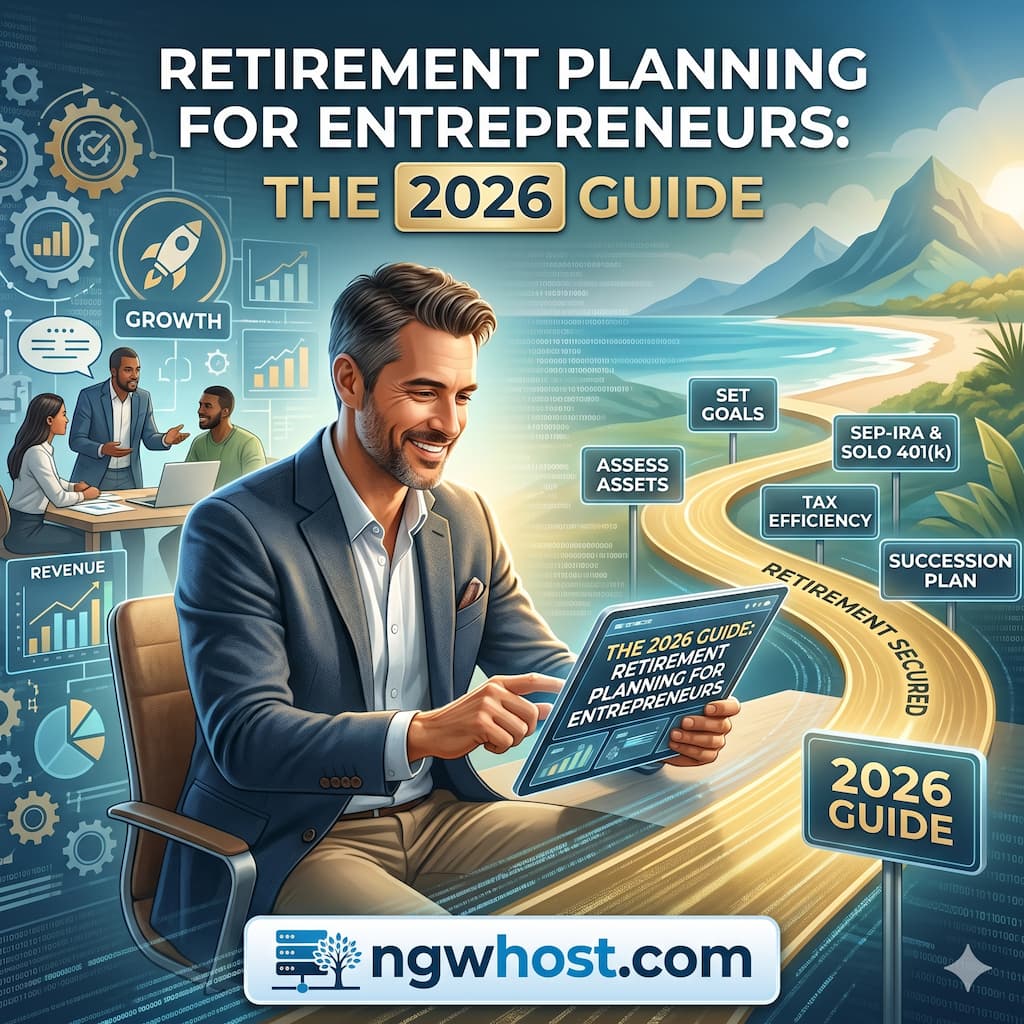
Retirement Planning for Entrepreneurs: The 2026 Guide
For the modern entrepreneur, the business often feels like a living, breathing extension of themselves. We pour our time, our energy, and our capital into building something that lasts. However, in the high-stakes world of 2026, many business owners are falling into a dangerous trap: assuming the business is the retirement plan.
While your company is a valuable asset, banking solely on a future sale is a high-risk gamble. Market conditions change, industries get disrupted by AI, and exit valuations can swing wildly. At NGWHost, we believe that true entrepreneurial success is defined by what you keep, not just what you build.
This guide provides a comprehensive roadmap for retirement planning tailored to the unique economic realities of 2026, where digital transformation, new tax laws, and shifting market dynamics have changed the rules of the game.
The 2026 Entrepreneurial Paradox
The “Retirement Paradox” for entrepreneurs is simple: You have the highest potential for wealth creation, yet you lack the safety net of a corporate 401(k) or a pension.
In 2026, several factors make planning more critical than ever:
- The SECURE 2.0 Evolution: New provisions in the SECURE 2.0 Act have fully matured this year, offering unprecedented tax credits and matching opportunities for small business owners.
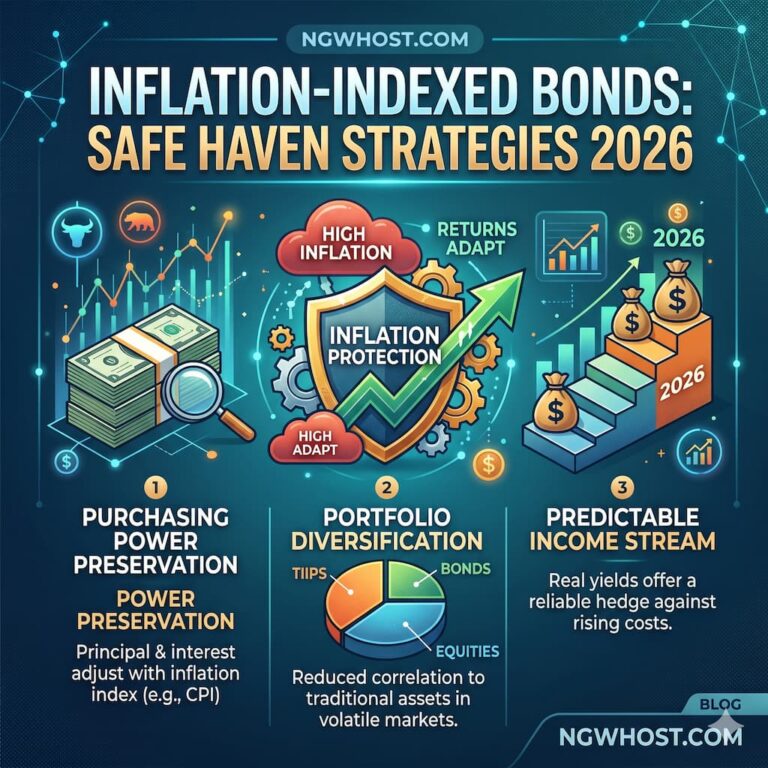
- Inflation Resilience: As discussed in our previous guides, protecting purchasing power is vital. Your retirement plan must outpace the structural inflation that has characterized the mid-2020s.
- Succession Complexity: With the rise of “Solo-preneurs” and micro-SaaS companies, the traditional model of “selling to a bigger fish” is evolving into more complex exit strategies involving employee buyouts or partial liquidations.
Step 1: Choosing the Right Tax-Advantaged Vehicle
In 2026, the menu of retirement accounts for self-employed individuals and small business owners has never been more robust. Choosing the right “bucket” can save you tens of thousands of dollars in annual taxes.
1. The Solo 401(k) (The Gold Standard)
For the “owner-only” business (or business with a spouse), the Solo 401(k) remains the most powerful tool.
- 2026 Contribution Limits: You can contribute up to $72,000 annually (or $80,000 if you are age 50 or older).
- The Power of Both Sides: You contribute as both the employee (up to $23,500) and the employer (25% of net self-employment income).
- Roth Option: Most providers now offer a Roth Solo 401(k), allowing you to pay taxes now and enjoy tax-free withdrawals in retirement—a vital strategy if you expect tax rates to rise by the 2040s.
2. The SEP IRA (Simplicity and Flexibility)
If you prefer minimal paperwork, the Simplified Employee Pension (SEP) IRA is your best bet.
- Pros: You can contribute up to 25% of your compensation (capped at $72,000 in 2026).
- Flexibility: You don’t have to contribute every year. In a “lean year” for your business, you can skip your contribution entirely without penalty.
3. The SIMPLE IRA (For Growing Teams)
If you have employees (up to 100), the SIMPLE IRA is a middle ground. It requires an employer match (typically 3%), but it has lower administrative costs than a full-scale corporate 401(k).
Step 2: Beyond the Basics – The “Triple Tax Advantage” of HSAs
One of the most overlooked retirement secrets in 2026 is the Health Savings Account (HSA). While technically for healthcare, it acts as a “Stealth IRA.”
- Immediate Deduction: Contributions lower your taxable income.
- Tax-Free Growth: You can invest your HSA balance in the stock market.
- Tax-Free Withdrawal: For medical expenses, the money comes out tax-free.
- Post-65 Flexibility: After age 65, you can withdraw money for any purpose at your normal income tax rate (just like a Traditional IRA), but you still keep the tax-free option for medical bills.
In 2026, the annual contribution limits have increased to $4,400 for individuals and $8,750 for families, making this a mandatory pillar of your plan.
Step 3: Investment Strategy for the 2026 Economy
How should an entrepreneur invest in 2026? Unlike a salaried employee, your primary “investment” is your business. This means your retirement portfolio should be counter-cyclical to your business risk.
1. Diversification Away from Your Industry
If you own a tech-hosting company like NGWHost, your retirement fund should not be 100% tech stocks. If the tech sector crashes, both your income and your savings will vanish simultaneously.
- Real Estate: High-yield commercial or residential property offers passive income.
- Gold and BTC: As discussed in our inflation hedge guide, a small percentage (5-10%) in “hard assets” provides a safety net during currency devaluations.
2. The Role of Private Equity and “Alts”
In 2026, alternative investments (Alts) have become more accessible. Many entrepreneurs are diversifying by investing in other private companies or specialized funds. However, remember the liquidity trap: do not put money into Alts that you might need in the next 3–5 years.
Step 4: Succession Planning – Your Ultimate Payday
The business itself is often the largest piece of an entrepreneur’s net worth. But to make it a part of your retirement, it must be “sellable.”
The 2026 Exit Pathways:
- Selling to a Strategic Buyer: Usually offers the highest valuation but often requires you to stay on as a consultant for 1–2 years (the “earn-out” phase).
- Management Buyout (MBO): Your key employees buy the company over time using the business’s own profits. This is increasingly popular in 2026 as it preserves company culture.
- The “Lifestyle” Wind-Down: If the business relies 100% on you, it has no resale value. Your goal should be to automate and systemize until you are “replaceable.” Only then is the business a true asset.
Step 5: Dealing with “Entrepreneurial Guilt”
A psychological barrier many of our clients at NGWHost face is “investing in the business vs. investing in themselves.” In the early years, every dollar “taken out” of the business feels like a missed opportunity for growth. However, in 2026, the cost of waiting is too high.
The Power of Compounding:
- $2,000/month invested at age 30 (7% return) = $2.4 million at age 65.
- $2,000/month invested at age 45 (7% return) = $1.04 million at age 65.
Wait 15 years, and you lose more than half your potential wealth. Paying yourself first isn’t “selfish”; it’s a strategic business requirement to ensure you don’t become a liability to your company later in life.
Step 6: Leveraging AI for Financial Management
By 2026, the “Financial Advisor” role has changed. We now have access to Autonomous Wealth Management tools.
- AI Tax Harvesting: Automatically sells losing positions to offset your capital gains, saving you money during tax season.
- Dynamic Rebalancing: AI monitors your portfolio and shifts assets in real-time based on market volatility, ensuring your risk levels stay aligned with your retirement date.
At NGWHost, we advocate for using technology to simplify complexity. Don’t spend 10 hours a week on your 401(k); spend 10 minutes checking your AI-driven dashboard.
The Checklist for 2026
If you haven’t started your retirement plan, or if your current plan is “I’ll sell the business one day,” here is your immediate action plan:
- Open a Solo 401(k) or SEP IRA today. Even if you only contribute $100 this month, establish the “bucket.”
- Audit your business’s “Key Man” dependency. Can the business survive without you for 3 months? If not, you don’t have an asset to sell yet.
- Automate your savings. Set up a recurring transfer from your business checking to your investment account. Treat it like a mandatory utility bill.
- Maximize your HSA. It’s the only way to get a “Triple Tax Win” in 2026.
- Review your insurance. Ensure you have “Business Overhead Expense” (BOE) insurance. If you get sick or injured, this pays the business bills so your retirement savings don’t have to.
Conclusion: Build Your Legacy, Protect Your Future
Retirement for an entrepreneur isn’t about stopping work; it’s about reaching the point where work is optional.
In 2026, the tools available to us—from high-contribution retirement accounts to AI-driven investment platforms—are more powerful than ever. But they require action. The most successful entrepreneurs are those who apply the same rigor to their personal balance sheet as they do to their company’s P&L.
Your business is your passion, but your retirement plan is your freedom.
Ready to Scale Your Business While Securing Your Future?
Visit NGWHost.com for high-performance hosting that grows with you, allowing you more time to focus on your long-term wealth.