Tokenized Real Estate: Investing in Fractional Property
The architectural alignment of real estate investing has undergone an absolute digital transformation. As we advance through May 2026, the traditional mechanisms that have governed property acquisition, asset optimization, and wealth generation for centuries—most notably opaque private equity syndicates, localized paper deeds, and illiquid commercial real estate markets—are being systematically dismantled. Property investing is no longer a slow, exclusive game restricted to high-net-worth individuals who can afford multi-million dollar down payments and navigate months of bureaucratic title escrow.
Today, the global real estate landscape operates on a highly decentralized, high-velocity timeline. For the software engineers, digital entrepreneurs, and technical asset allocators within the ngwhost.com community, structural inefficiencies are a form of engineering failure. Just as you ruthlessly optimize server CPU allocations, deploy content delivery networks (CDNs) to eradicate packet latency, and decouple monolithic code bases into microservices, your wealth architecture must be engineered to eliminate unnecessary administrative middlemen.
The paradigm shifting the property market this year is the widespread stabilization of Real-World Asset (RWA) Tokenization. By converting physical real estate assets into programmable digital tokens circulating on secure, institutional-grade blockchain layers, global property markets have permanently unlocked fractionalized ownership, sub-second atomic settlement, and borderless capital fluidity.
1. The 2026 Shift: From Illiquid Bricks to Programmable Asset Blocks
To successfully exploit the power of fractional property investing today, you must first deconstruct the core vulnerabilities of traditional real estate management. For generations, physical property was universally viewed as the ultimate defensive wealth storage vehicle, yet it carried massive operational liabilities:
- Capital Paralyzation: Acquiring high-yield commercial or residential property required vast amounts of upfront cash capital, locking up a developer’s liquidity inside a singular geographic asset for years.
- Extreme Transaction Latency: Selling a traditional property takes an average of 30 to 90 days, racking up extensive closing fees, legal title clearing costs, and intermediary real estate broker commissions that erode net trailing margins.
- The Sourcing Moat: Top-tier institutional real estate opportunities—such as high-density logistics fulfillment centers or prime urban multi-family complexes—were completely inaccessible to individual digital founders, reserved exclusively for massive REITs and institutional private equity firms.
In 2026, the market has resolved these vulnerabilities through Fractionalized Property Tokenization.
  LEGACY PROPERTY ACQUISITION (High Friction & Capital Lockup)
  [Locate Asset] ──► [Months of Legal Escrow] ──► [Massive Cash Down Payment] ──► [Illiquid 10-Year Horizon]

  MODERN RWA TOKENIZATION GRID (Ambient & Hyper-Fractionalized)
  [Verified SPV Property Core] ──► [On-Chain Contract Sharding] ──► [Instant Micro-Token Purchase] ──► [Real-Time Rent Yield Payout]
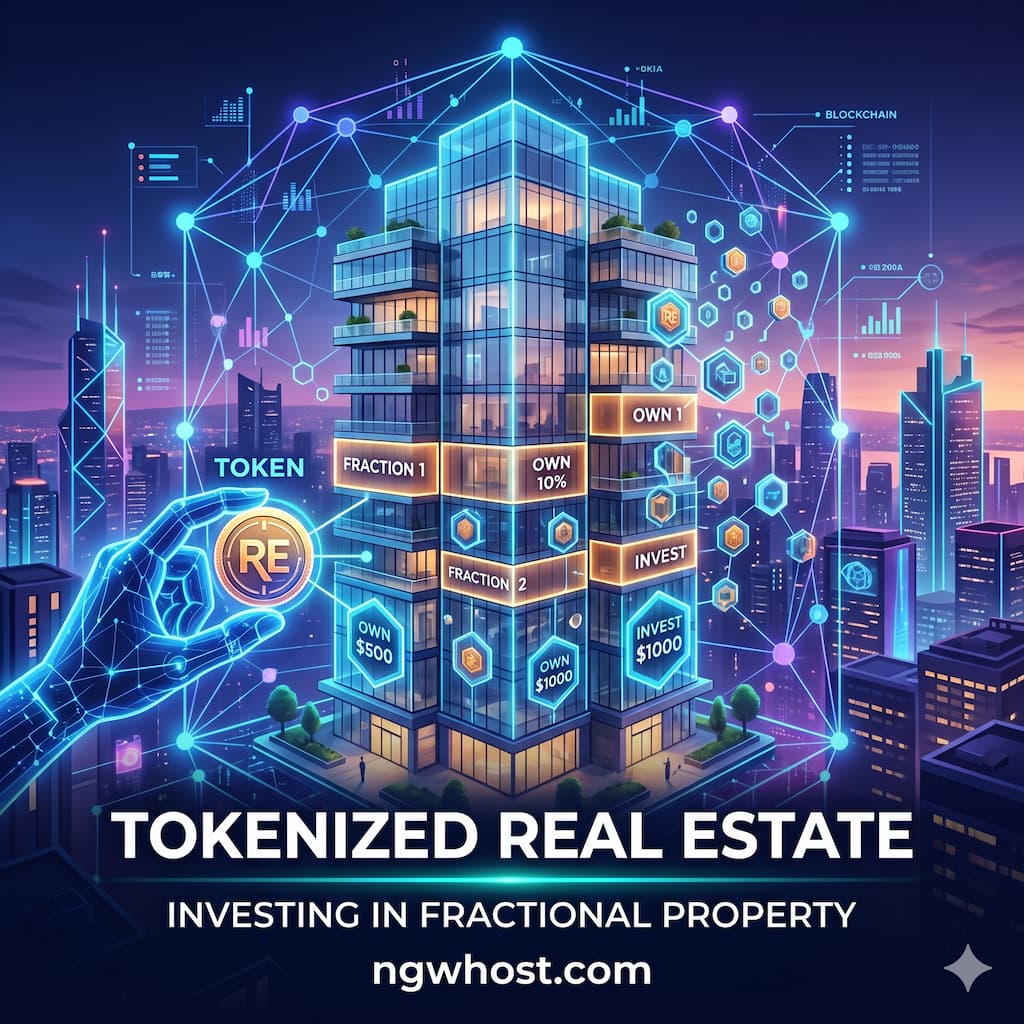
Under this modern architecture, a physical property is legally secured within a dedicated Special Purpose Vehicle (SPV) or corporate trust. The underlying equity ownership of that entity is then cryptographically divided into thousands of unique, compliant digital tokens. An investor can acquire a fractional stake in a high-yield medical office building or a multi-family complex for as little as $50, instantly capturing a proportional slice of both the monthly rental income distributions and the long-term asset capital appreciation.
2. Core Cryptographic and Legal Pillars of Tokenized Real Estate
Scaling a global property portfolio from your digital workstation requires an intricate understanding of the technological and regulatory frameworks that ensure the absolute safety of your capital.
I. Compliance-First Smart Contract Frameworks (ERC-3643 and T-REX)
Early attempts at asset tokenization were plagued by regulatory confusion, often utilizing basic, unrestricted ERC-20 utility tokens that violated cross-border securities laws. In 2026, the institutional marketplace operates exclusively on specialized security token standards, most notably ERC-3643 and the T-REX (Tokenized Real Estate Ecosystem) framework.
- The Identity Filter: These advanced smart contracts feature native, decentralized identity tracking. A token cannot be transferred, sold, or traded to another wallet unless the receiving wallet satisfies real-time automated compliance checks—including Know Your Customer (KYC), Anti-Money Laundering (AML), and regional investor accreditation thresholds. The compliance parameters are hard-coded into the execution logic of the token itself, rendering unauthorized transactions mathematically impossible.
II. Automated Yield Distribution and Rent Oracle Networks
Managing monthly tenant rental income across thousands of global fractional owners manually would generate an unsustainable administrative accounting bottleneck.
- The Execution Automation: Modern tokenized real estate portals deploy automated Yield Distribution Hooks.
- The Protocol: The moment a corporate commercial tenant pays their rent into the property management’s digital escrow ledger, specialized Decentralized Oracle Networks (such as Chainlink) verify the transaction data payload. The smart contract instantly executes an on-chain split, programmatically streaming stablecoin yield payouts (such as USDC or regulated fiat tokens) directly to the fractional token holders’ wallets in exact proportion to their underlying share ownership, shifting real-world property management into a passive, software-driven experience.
III. The Convergence of DeFi and Real-World Asset Collateralization
The most profound financial unlock of 2026 is the ability to leverage your fractional property tokens within the broader Decentralized Finance (DeFi) ecosystem.
- Instant Capital Mobilization: Historically, if a property owner needed liquidity to fund a new server expansion on ngwhost.com or scale an ad campaign, they had to apply for an expensive, slow home equity line of credit (HELOC) from a traditional bank.
- The On-Chain Alternative: Today, investors take their verified real estate tokens and deposit them as interest-bearing collateral into advanced lending protocols like Aave V4 or Morpho. Within seconds, the system permits the investor to borrow liquid stablecoins against the value of their property tokens, allowing you to extract immediate operational liquidity from your real estate holdings without triggering a taxable asset sale event.
3. The 2026 Tokenization Ecosystem: Institutional Market Engines
To systematically transition your corporate treasury into fractionalized real-world property, you must interface with platforms that maintain absolute regulatory compliance, clean property governance histories, and deep legal infrastructure. The current 2026 horizon features elite market engines:
| Tokenization Platform | Primary Jurisdiction | Target Real Estate Focus | Core Technical Advantage |
| RealT | US & International Properties | High-Yield Fractional Residential | Daily Rent Streams: Programmatically streams stablecoin rental distributions to web3 wallets every 24 hours. |
| Lofty AI | United States Markets | AI-Underwritten Multi-Family Core | Algorithmic Selection: Leverages predictive neural networks to source properties with high projected municipal growth rates. |
| Centrifuge / Securitize | Institutional Global Grid | Commercial Logistics & Real-World Funds | Enterprise Architecture: Directly partners with investment institutions like BlackRock to wrap major funds into on-chain security structures. |
| DigiShares | Multi-Jurisdictional White-Label | Large-Scale Developer Syndications | Sovereign Cap Table Engine: Delivers full internal corporate governance, automated proxy voting, and compliant secondary exchange rails. |
4. Tactical Roadmap: Constructing Your Distributed Property Matrix
Transitioning your capital stack away from high-fee, illiquid asset structures and engineering a high-performance, tokenized property portfolio requires a systematic, architecturally sound roadmap.
Step 1: Execute a Granular Geographic and Sector Matrix
An automated portfolio is only as strong as the underlying physical assets backing the digital tokens. Do not chase abstract yield numbers without verifying the physical coordinates of the underlying real estate. Utilize your chosen platform’s data API tools to construct a globally diversified portfolio matrix. Split your allocations across diverse real estate sectors and geographic hubs to hedge your capital against regional market adjustments:
                            [Allocated Real Estate Capital]
                                           │
                                           ▼
                         ┌───────────────────────────────────┐
                         │   Automated Allocation Protocol   │
                         └─────────────────┬─────────────────┘
                                           │
                ┌──────────────────────────┼──────────────────────────┐
                ▼                          ▼                          ▼
 ┌────────────────────────────┐ ┌────────────────────────────┐ ┌────────────────────────────┐
 │  US MULTI-FAMILY HOUSING   │ │  EUROPEAN LOGISTICS HUBS   │ │ LATAM URBAN REAL ESTATE    │
 │ 40% Allocation - Resilient │ │ 30% Allocation - Fueled by │ │ 30% Allocation - Capturing │
 │ baseline consumer rental   │ │ compounding e-commerce and │ │ high-growth urbanization   │
 │ cash flow profiles.        │ │ supply chain demands.      │ │ and infrastructure plays.  │
 └────────────────────────────┘ └────────────────────────────┘ └────────────────────────────┘
Step 2: Establish an Automated Capital Compound Loops
To maximize the compounding velocity of your real estate investments, integrate your tokenized yield feeds directly with your primary business operations backend. Configure your wallet settings to automatically route all incoming daily or monthly stablecoin rental payouts straight into automated compounding pools—either auto-reinvesting the yields to acquire more fractional shares of newly listed properties, or routing the capital into high-yield decentralized lending vaults. This creates a self-sustaining financial loop where your property yields continuously acquire more cash-flowing assets without requiring a single minute of manual human management.
Step 3: Implement Zero-Trust Custodial Governance
As your digital tokenized real estate portfolio expands, protecting your cryptographic private keys from advanced cyber threat vectors becomes just as critical as maintaining physical property insurance. Enforce strict enterprise-grade security protocols: store all your property security tokens within Multi-Party Computation (MPC) institutional wallets or hardware-isolated storage configurations, mandate multi-signature authentication frameworks for any outbound token movements, and ensure your operational wallets are completely decoupled from high-risk, un-vetted smart contract testing environments.
5. Critical Risk Management: Navigating the 2026 RWA Bottlenecks
While the capital-efficient, liquid, and borderless advantages of fractionalized property are unmatched, operating within tokenized real-world assets requires a rigorous, zero-trust risk management posture:
- The Reality of Physical Asset Risk: No matter how immutable a blockchain ledger is, it cannot stop a real-world storm, a localized economic contraction, or a physical pipeline rupture. If a tokenized building faces structural damage or experiences a severe vacancy event, the underlying token value will drop in lockstep. The Action: Ensure the tokenization platform you select partners exclusively with fully insured, tier-1 property management firms that maintain robust physical maintenance capital reserves and comprehensive structural liability insurance wraps.
- The Vulnerability of Secondary Market Liquidity Fragmentation: While security tokens are infinitely more liquid than traditional real estate deeds, the secondary trading markets for fractional properties (such as specialized alternative trading systems or automated market makers) can still encounter periods of thin trading volume during broader macroeconomic drawdowns. If you need to liquidate millions of dollars in fractional property tokens instantly, you may face wide bid-ask spreads. Classify your real estate tokens strictly within your Long-Term Wealth Preservation Layers, preserving your rapid-access cash pools for immediate, short-term business bills.
- Navigating the Special Purpose Vehicle (SPV) Bankruptcy Risk: If the underlying platform or technical operator that tokenized the real estate encounters financial insolvency or faces an adverse corporate litigation event, you must ensure your property assets are legally insulated. Only invest through platforms that utilize Bankruptcy-Remote SPV Structures. This contractual configuration guarantees that the title deed of the physical building is legally owned by an independent corporate entity completely separated from the tokenization platform’s primary balance sheet, ensuring that your real-world property assets remain 100% protected and auditable by courts independent of the tech provider’s fate.
6. The Systems Synergy: Engineering High-Availability Capital Redundancy
For the advanced cloud systems developers, database architects, and technology innovators who engineer their web applications and enterprise platforms on the backbone of ngwhost.com, the structural discipline of tokenized real estate investing is deeply intuitive.
When you configure a high-performance corporate hosting layout or an international server cluster, you do not tolerate single points of failure. You don’t leave your system architecture vulnerable to a single server crash, a localized network drop, or an un-monitored processing leak. You design with systemic, mathematical redundancy: you utilize load balancers to distribute data traffic smoothly, deploy isolated container instances across multiple geographic data zones to handle resource spikes effortlessly, and maintain secure, multi-region database mirrors to ensure that if a critical server cluster drops offline, the broader network continues to perform flawlessly without data corruption.
An integrated Fractionalized Real Estate Tokenization Strategy functions exactly like a highly redundant, high-availability architecture for your company’s equity and capital stacks:
- Your Real-Time Rental Streams and Compliant Smart Contracts operate as your high-velocity edge nodes, parsing and clearing daily incoming capital allocations with absolute fluid precision.
- Your Globally Diversified Geographic and Sector Allocations act as your resilient core database clusters, instantly compounding and protecting your active capital reserves, completely insulated from individual localized economic failures.
- Your Bankruptcy-Remote SPV Structures and Lending Protocol Collateralizations behave as your secure, offline, un-hackable off-site backups, silently securing your foundational corporate wealth independent of stock market cycles or local fiat currency debasement.
By mastering this technical configuration, you strip away financial tracking drag, eliminate legacy real estate infrastructure vulnerabilities, and position your digital brand to scale at terminal velocity while retaining absolute, sovereign control over the global enterprise you built.
Read More⚡ Central Bank Digital Currencies: CBDC Rollouts in 2026
Conclusion: The Era of Frictionless Property Ownership
The traditional separation between high-velocity digital software agility and long-term tangible asset accumulation has been permanently dismantled by the 2026 real-world tokenization revolution. Continuous, fractionalized real estate investing is no longer an experimental web3 sandbox concept; it stands today as a core, baseline operational framework for any capital-efficient corporate diversification strategy. The ability to express your financial values through direct capital deployment into real-world structures while securing predictable, uncorrelated, and automated passive yields has permanently rewritten the relationship between code and capital.
Managing the risks within this globally distributed, asset-backed environment is not a matter of luck; it is an exact discipline of precise data verification, systematic pool diversification, and zero-trust corporate governance. By unifying your transactional pipelines via secure compliant platforms, configuring automated compounding loops to maximize return velocities, and prioritizing bankruptcy-remote legal structures, you completely eliminate structural friction and capital paralysis from your expansion equation.
The commercial landscape of 2026 rewards velocity, data integrity, and capital-efficient execution. Build your property stack with absolute precision, protect your cap table fiercely, and let your enterprise scale to global heights on your own terms.