
Microfinance Platforms: High-Impact Investing in 2026
The global financial system has officially entered an era of radical, bottom-up decentralization. As we navigate through May 2026, the historic monopoly held by legacy banking institutions over capital distribution has disintegrated. In its place, a lean, highly efficient, and cloud-native financial infrastructure has emerged—one that allows capital to flow seamlessly from international investors directly to unbanked and underbanked entrepreneurs across emerging economies.
Historically, portfolio diversification for mid-sized enterprises, tech entrepreneurs, and private asset allocators was confined to traditional equities, real estate, and fixed-income bonds. In 2026, however, macroeconomic cross-winds—characterized by persistent inflation baselines and volatile public market valuations—have driven sophisticated allocators to search for uncorrelated, resilient alternative assets.
At the absolute intersection of strong financial returns and measurable social contribution stands Institutional-Grade Microfinance Platforms.
For the digital entrepreneurs, web platform builders, and technology innovators within the ngwhost.com community, operational efficiency is a core philosophy. We design software architectures to eliminate unnecessary infrastructure middlemen, optimize resource allocation, and scale systems with minimal overhead.
Applying this exact same engineering logic to your investment capital means bypassing legacy banking networks and utilizing advanced digital platforms to deploy liquidity directly into high-growth, underserved market sectors.
This comprehensive 2026 investment manual delivers a thorough tactical analysis of the microfinance landscape, deconstructs the underlying software and cryptographic tech stacks driving down default rates, and provides an actionable blueprint to diversify your corporate treasury into high-impact, yield-bearing alternative assets.
1. The 2026 Macro Environment: Why Microfinance Has Scaled
To successfully execute a high-impact investment strategy this year, you must first dismantle the outdated perception that microfinance is purely a form of charitable aid or non-profit philanthropy. In 2026, microfinance operates as a Highly Institutionalized, Commercial-Grade Asset Class.
    THE 2026 EMERST-MARKET VELOCITY LOOP
┌──────────────────────────────────────────────────┐
│ Mainstream Smartphone & Mobile Internet Adoption │
└────────────────────────┬─────────────────────────┘
                         │
                         ▼
┌──────────────────────────────────────────────────┐
│ API Integration with Native Payment Systems      │
└────────────────────────┬─────────────────────────┘
                         │
                         ▼
┌──────────────────────────────────────────────────┐
│  AI-DRIVEN COGNITIVE UNDERWRITING & DE-RISKING   │
│  * Real-time cash flow optimization profiles     │
│  * Behavioral mobile telemetry scoring           │
│  * Near-zero historical default baselines        │
└──────────────────────────────────────────────────┘
The massive scaling of this sector has been driven by a global technological convergence: the near-universal adoption of low-cost smartphones, the expansion of high-speed mobile internet networks, and the integration of unified national payment rails (such as Brazil’s Pix, India’s UPI, and Africa’s mobile money protocols).
Unbanked micro-entrepreneurs who were previously locked out of the formal banking system due to a lack of physical collateral or brick-and-mortar bank branches can now access capital instantly via localized mobile applications.
For international allocators, this technology-driven integration solves the historical challenge of transaction overhead. In the past, managing thousands of micro-loans ($500 to $5,000 each) across different continents was an administrative impossibility for mid-sized funds.
In 2026, API-first microfinance platforms handle the orchestration, multi-currency conversion, compliance tracking, and capital collection automatically, passing highly consistent 8% to 12% annualized yields directly to your corporate balance sheet. Because these yields are derived from real-world, localized economic activities—such as an agrarian processing setup in Southeast Asia, a community solar grid installation in Sub-Saharan Africa, or a localized retail delivery fleet in Latin America—their performance is completely uncorrelated with the volatile swings of Western stock markets.
2. Core Pillars of the 2026 Microfinance Platform Tech Stack
Investing safely in microfinance at a distance requires understanding the advanced software, data analytics, and risk management protocols that safeguard your principal capital. Modern platforms are built on four technological pillars.
I. AI-Driven Alternative Underwriting and Mobile Telemetry
The primary reason traditional commercial banks refuse to lend to micro-entrepreneurs is the absence of a conventional credit score. 2026 microfinance platforms bypass this limitation entirely by deploying AI-Native Cognitive Underwriting Models.
- The Data Ingestion Layer: With explicit user consent, the platform’s mobile application analyzes alternative data points directly from the entrepreneur’s smartphone.
- The Mathematical Scoring: The AI evaluates transactional data from mobile business wallets, localized supply chain inventory logs, and behavioral mobile telemetry (such as utility billing payment consistencies and digital sales velocities). Within seconds, the system generates a highly accurate risk score that frequently outperforms traditional bureau metrics, keeping portfolio default rates below an institutional 1.5% to 2.5% baseline.
II. On-Chain Transparency Layer via Real-World Asset (RWA) Tokenization
A major historical risk for international investors tracking alternative emerging-market debt was “platform opacity”—the fear that intermediary agencies were misallocating capital or masking non-performing assets.
- The Cryptographic Solution: Advanced 2026 microfinance portals utilize Real-World Asset (RWA) Tokenization.
- The Execution: When you allocate funds to a microfinance pool, your capital is mapped directly to fractionalized, on-chain debt smart contracts. Every single principal disbursement, monthly interest payment, and localized exchange rate adjustment is immutably recorded on a public-permissioned distributed ledger, allowing your corporate compliance officers to audit your portfolio’s exact data lineage and cash flow state in real-time.
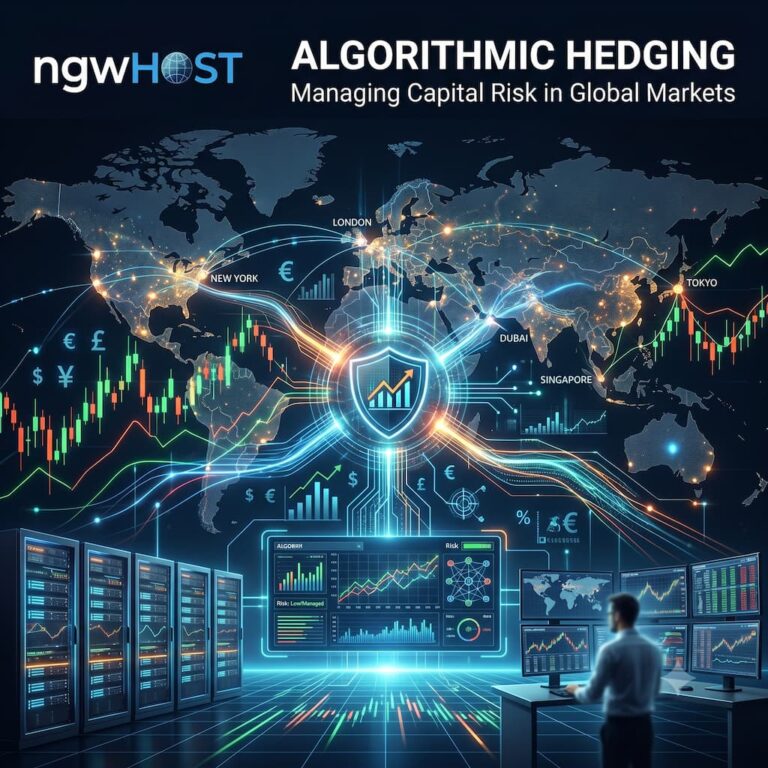
III. Automated Multi-Currency Hedging and Settlement Corridors
Investing in emerging markets inherently introduces foreign exchange (FX) volatility risk. If a micro-loan is disbursed in a local currency that experiences a sudden depreciation against your base operational currency (such as the USD or EUR), your net yield can be instantly wiped out upon repatriation.
- The Automation Shield: 2026 platforms integrate Automated Programmable FX Swap Corridors. The moment your capital enters an international loan pool, the system uses decentralized liquidity pools or institutional derivatives to lock in a fixed currency hedge. This ensures that while the borrower repays their loan in their native currency, your incoming interest distributions are contractually returned to your corporate treasury at a pre-negotiated, stabilized exchange rate.
IV. Dynamic Fractionalized Pool Diversification
To maximize downside capital protection, modern microfinance software enforces the architectural principle of Automated Fractionalization.
Instead of your investment capital being allocated to a single project or a hand-picked group of borrowers, your deposit is split into tiny fragments (frequently as small as $5 per borrower) and distributed across thousands of distinct entrepreneurs spanning multiple industries, geographic regions, and demographic segments. This high-density diversification creates an incredibly stable yield profile: if an isolated region encounters a localized crop failure or economic disruption, the performance of the thousands of remaining, non-correlated loans absorbs the impact seamlessly.
3. The 2026 Microfinance Platform Landscape: Qualified Entry Channels
To securely incorporate high-impact micro-debt into your corporate asset allocation strategy on ngwhost.com, you must partner with platforms that feature robust compliance frameworks, institutional-grade API layers, and proven default-mitigation histories. The current 2026 matrix features elite global channels:
| Platform Category | Leading 2026 Platforms | Primary Target Markets | Target Yield Range | Core Strategic Feature |
| Institutional RWA Tokenization | Goldfinch / Credix / Centrifuge | Latin America, Southeast Asia, Sub-Saharan Africa | 9.5% – 13.0% | On-Chain Auditability: Every loan facility is fully transparent, cryptographically tracked, and open to continuous programmatic verification. |
| API-Driven P2P Crowdfunding | Kiva Enterprise / Lendahand / Zidisha | Emerging Global Markets (80+ Countries) | 5.0% – 8.5% | Direct Social Correlation: Unmatched tracking tools detailing the exact community economic metrics moved by your capital. |
| Verticalized Agribusiness Portals | ProducePay / Tarfin | Latin American and Eastern European Agricultural Hubs | 8.0% – 11.0% | Supply Chain Integration: Capital is directly linked to real-time crop inventory tracking and international retail purchase guarantees. |
4. Tactical Roadmap: Integrating Impact Yields into Your Corporate Treasury
Transitioning your enterprise capital away from static, low-yielding accounts and executing a modern, high-impact asset allocation strategy requires a systematic, architecturally sound blueprint.
Step 1: Execute a Cash Fragmentation Analysis
Begin your alternative asset optimization by defining exactly what portion of your surplus corporate capital can be committed to a fixed-income horizon. While 2026 microfinance platforms offer significantly higher liquidity than legacy private equity vehicles—frequently providing monthly interest distributions and structured 6-to-12-month pool exits—this capital should still be classified under your Core Reserve or Strategic Liquidity Layers.
The Baseline Allocation Rule: Limit your alternative micro-debt exposure to a maximum of 10% to 15% of your total aggregate treasury reserves, preserving your instant-access checking accounts exclusively for day-to-day server renewals on ngwhost.com, payroll, and immediate software scaling routines.
Step 2: Configure a Multi-Region, Multi-Sector Matrix
Do not allow your impact portfolio to develop a geographic or industrial bias. Utilize your platform’s administrative dashboard to configure strict Algorithmic Asset Allocation Guardrails. Force the software engine to divide your incoming capital across multiple distinct vectors:
                            [Corporate Treasury Capital]
                                         │
                                         ▼
                        ┌─────────────────────────────────┐
                        │  Automated Allocation Selector  │
                        └────────────────┬────────────────┘
                                         │
               ┌─────────────────────────┼─────────────────────────┐
               ▼                         ▼                         ▼
┌─────────────────────────────┐┌─────────────────────────────┐┌─────────────────────────────┐
│  LATIN AMERICAN LOGISTICS   ││   SOUTHEAST ASIAN RETAIL    ││  AFRICAN AGRIBUSINESS PICA  │
│ 33% Allocation - High-speed ││ 33% Allocation - Predictable ││ 34% Allocation - Climate-  │
│ urban delivery fleets.      ││ consumer transaction nodes. ││ resilient smart-grids.      │
└─────────────────────────────┘└─────────────────────────────┘└─────────────────────────────┘
This structural configuration ensures that your returns are anchored to a globally diversified cross-section of the emergent real-world economy, making your balance sheet completely resilient to any localized geopolitical, weather-related, or monetary disruptions.
Step 3: Implement an Automated Dividend Reinvestment Pipeline
To extract the maximum capital growth potential out of your microfinance strategy, configure your platform’s API hooks to route all monthly principal and interest distributions back into active lending pools automatically. This creates an optimized Digital Compounding Engine. By automatically utilizing your incoming cash flow to finance new tranches of vetted, high-scoring micro-entrepreneurs, you compound your net returns without requiring a single minute of manual portfolio administration.
5. Critical Risk Management: Navigating the 2026 Microfinance Pitfalls
While the anti-dilutive, uncorrelated, and socially valuable benefits of micro-investing are exceptional, operating within emerging economies requires a highly defensive risk management posture:
- The Threat of Platform-Level Fraud or Malfeasance: Because microfinance relies on local operational field partners (MFI originators) to physically distribute and collect capital from borrowers on the ground, the internal honesty of the platform is vital. The Rule: Only deploy capital through platforms that conduct exhaustive, institutional-grade due diligence on their local field partners and enforce contractually backed first-loss capital buffers—where the platform’s own balance sheet absorbs the first wave of any default spikes before your principal is ever touched.
- Navigating Local Regulatory Changes: Emerging market nations frequently modify their domestic interest-rate ceilings, digital wallet licensing frameworks, and international cross-border tax withholding laws. A regulatory shift in a single nation can temporarily disrupt capital repatriation pipelines. Maintain absolute cross-border redundancy by verifying that your primary platform operators hold multi-jurisdictional financial licenses across diversified sovereign legal enclaves.
- The Mirage of High-Yield Unregulated DeFi Pools: Avoid the temptation to chase unrealistic, double-digit returns inside un-vetted, non-compliant decentralized finance (DeFi) liquidity pools that claim to back micro-enterprises but lack rigorous data-driven credit underwriting or institutional regulatory tracking. High-impact corporate asset management must always prioritize foundational capital preservation over speculative yield chasing. Stick exclusively to platforms that mandate full AML/KYC identity verification across all participants.
6. The Systems Synergy: Engineering Redundancy for Corporate Capital
For the advanced full-stack developers, infrastructure architects, and platform innovators who build their digital enterprises on the backbone of ngwhost.com, the structural design of an optimized microfinance asset layer is deeply intuitive.
When you configure an enterprise server architecture or an enterprise cloud network, you don’t tolerate single points of failure. You don’t leave your system vulnerable to a single localized power loss or a single database corruption point. You design with systemic, mathematical redundancy: you split operations across distinct processing regions, utilize hardware-isolated container enclaves, enforce automated monitoring alerts, and maintain secure, multi-region database mirrors to ensure that if a critical server cluster drops offline, the broader network continues to perform flawlessly.
An allocation into an automated Institutional Microfinance Portfolio is simply extending that exact same systemic, multi-layered architectural redundancy to your company’s capital stack:
- Your AI Underwriting Algorithms and Real-Time Mobile Telemetry operate as your isolated, automated monitoring scripts, silently evaluating transaction health and catching data risks long before they turn into real-world defaults.
- Your Automated FX Swap Corridors and Hedging Mechanisms act as your resilient, enterprise-grade firewalls, insulating your core corporate treasury balances from external foreign currency volatility and market disruptions.
- Your Tokenized Smart Contracts and Fractionalized Global Pools behave as your secure, multi-region database backups, ensuring that your company’s foundational wealth is distributed across thousands of distinct real-world economic engines, completely independent of local stock market cycles or fiat currency debasement.
By mastering this technical configuration, you strip away financial vulnerability, eliminate asset drag, and position your digital brand to scale with absolute predictability while funding the real-world growth of the global economy.
Read More⚡ Institutional Crypto Custody: Securing Assets in 2026
Conclusion: The Double-Bottom-Line Victory
The traditional separation between financial asset growth and ethical human contribution has been permanently dismantled by the 2026 digital fintech revolution. High-impact micro-investing is no longer a niche, experimental concept; it stands today as a core, baseline operational framework for any capital-efficient corporate diversification strategy. The ability to express your financial values through direct capital deployment while securing predictable, uncorrelated, and inflation-hedged yields has permanently rewritten the relationship between code and capital.
Managing the risks within this globally distributed environment is not a matter of luck; it is an exact discipline of precise cryptographic verification, systematic pool diversification, and zero-trust counterparty governance. By aligning your capital strictly with data-validated platforms, automating your reinvestment pipelines to compound returns, and enforcing strict risk-tier boundaries across your allocations, you completely eliminate the downsides of alternative market exposure.
The fundraising landscape of 2026 rewards agility, global technological connectivity, and structural asset ownership. Build your capital stack with absolute precision, protect your foundational wealth behind an institutional, real-world shield, and let your enterprise scale to global heights on your own terms.