Estate Planning 2026: Protecting Your Digital Assets
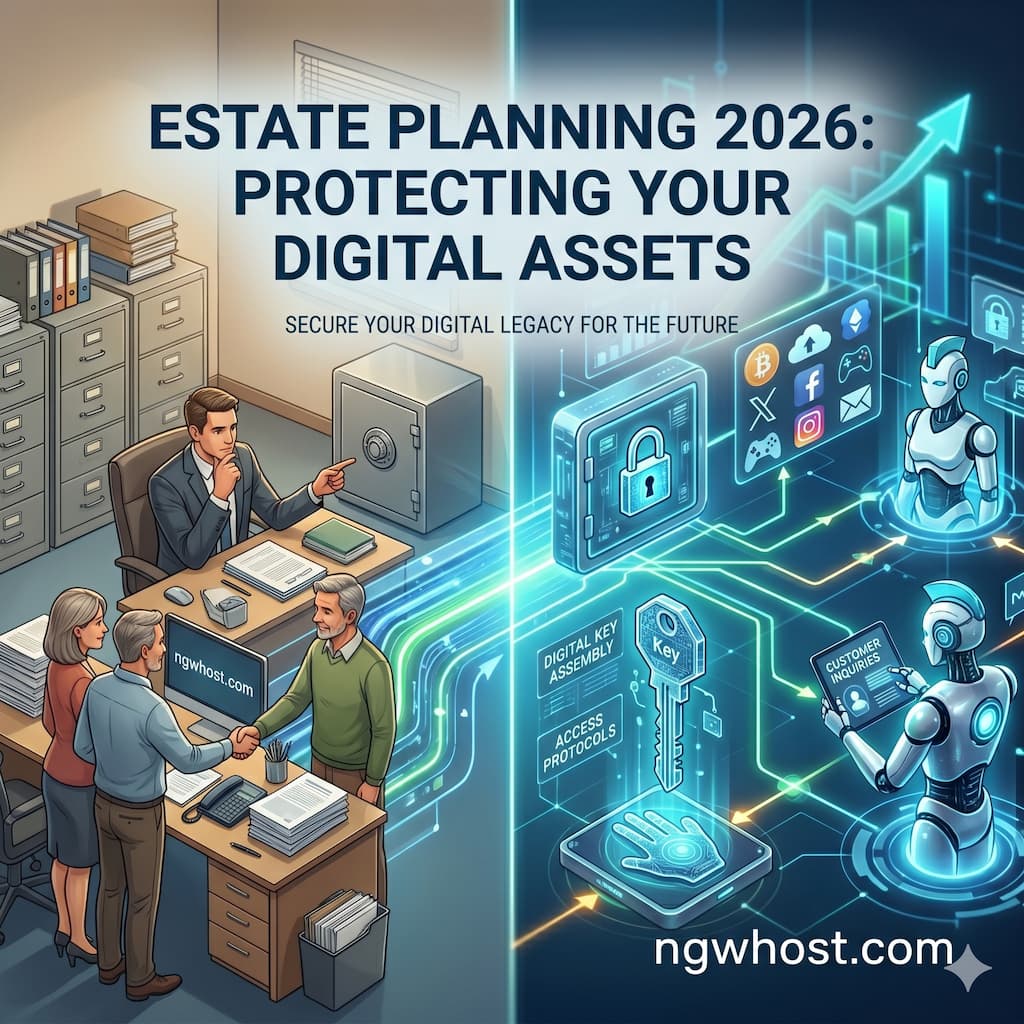
In the physical world, your legacy is defined by what you leave behind in boxes, deeds, and bank accounts. But as we move through 2026, a significant portion of our lives—and our wealth—exists solely in the form of bits and bytes. From cryptocurrency portfolios and tokenized real estate to monetized TikTok channels and AI-generated intellectual property, our “digital estates” have become as valuable as our physical ones.
For the readers of ngwhost.com, who often manage complex web infrastructures and digital storefronts, the risk of “digital lockout” is a real threat to family security. Without a proper plan, your digital assets can become permanently inaccessible, trapped behind encrypted passwords and restrictive Terms of Service (ToS) agreements.
This guide provides a comprehensive framework for Digital Estate Planning in 2026, ensuring your digital legacy is preserved, accessible, and legally protected for the next generation.
1. Defining Digital Assets in 2026
In 2026, the definition of a digital asset has expanded beyond just “email and photos.” To protect your estate, you must first categorize what you own.
A. Financial Digital Assets
These are assets with direct market value.
- Cryptocurrencies & Stablecoins: Bitcoin, Ethereum, and the regulated stablecoins that now underpin global payments.
- Tokenized Assets: Shares of real estate, carbon credits, or private equity held as tokens on a blockchain.
- Digital Storefronts: Domains (like your assets on ngwhost.com), TikTok Shop accounts, and e-commerce platforms.
B. Intellectual Property & AI Assets
A new category for 2026, these are assets that generate ongoing royalties.
- AI Models & Content: Rights to AI-generated art, music, or writing, as well as the “weights” of custom-trained AI models you may own.
- Monetized Content: YouTube channels, blogs, and social media profiles with active ad-revenue streams.
C. Sentimental & Administrative Assets
These may lack cash value but are vital for identity and history.
- Cloud Storage: Decades of family photos and videos stored in Google Photos or iCloud.
- Digital Identity: Social media profiles (Instagram, X, LinkedIn) and personal email archives.
- Subscription Services: From SaaS tools to entertainment, which must be canceled to avoid draining the estate’s cash.
2. The Legal Landscape: RUFADAA and Beyond
The primary legal challenge in 2026 is that access does not equal ownership.
The RUFADAA Framework
Most U.S. states and several international jurisdictions have adopted the Revised Uniform Fiduciary Access to Digital Assets Act (RUFADAA). This law creates a three-tier hierarchy for who can access your accounts after you pass:
- Tier 1: Online Tools. If a platform provides a tool (like Google’s Inactive Account Manager or Apple’s Legacy Contact), your choice there overrides your will.
- Tier 2: Legal Documents. If you didn’t use an online tool, the instructions in your Will or Trust take precedence.
- Tier 3: Terms of Service (ToS). If neither of the above exists, the platform’s ToS—which usually prohibits sharing passwords—will likely lock your family out forever.
Global Shifts in 2026
In the EU, the MiCA (Markets in Crypto-Assets) regulations and new tax transparency regimes (DAC8) mean that digital financial assets are now more visible to regulators. This makes it easier for heirs to claim financial assets if the legal paperwork is in order, but it also means those assets are now subject to clearer inheritance tax protocols.
3. The 4-Step Digital Estate Plan
To protect your digital legacy on ngwhost.com and beyond, follow this 2026 roadmap.
Step 1: Create a Digital Inventory
You cannot protect what your executor doesn’t know exists. Use a secure offline document or an encrypted digital vault to list:
- Hardware: Laptops, phones, and cold-storage crypto wallets.
- Accounts: Emails, social media, and hosting providers.
- Value: Note which accounts have a monetary balance or generate income.
Pro Tip: Never include passwords directly in your Will. Your Will becomes a public document after probate. Instead, use your Will to point to a “Digital Memorandum” or a Password Manager.
Step 2: Appoint a “Digital Executor”
A traditional executor might be great at selling a house but lost when it comes to transferring a domain or accessing a multi-sig crypto wallet.
- Designate a Digital Specialist: Appoint someone with the technical savvy to handle your online business and crypto security.
- Grant Explicit Authority: Ensure your Will contains specific language granting your digital executor the power to “bypass, reset, or recover” your digital credentials under RUFADAA guidelines.
Step 3: Utilize “Legacy Tools” Today
Don’t wait for the legal system to catch up. Use the tools provided by the platforms:
- Google: Set up the Inactive Account Manager.
- Apple: Designate a Legacy Contact.
- Meta/Facebook: Choose a Legacy Contact to manage or memorialize your profile.
- Password Managers: Use the “Emergency Access” feature in tools like 1Password or Bitwarden.
Step 4: Secure Your Crypto & Private Keys
This is the “high-stakes” part of 2026 estate planning. If your private keys are lost, the money is gone.
- Social Recovery Wallets: Use wallets that allow for “Guardian” recovery.
- Dead Man’s Switches: Set up automated systems that send your keys to a beneficiary if you don’t “check-in” for six months.
- Physical Backups: Store a physical recovery seed in a bank safety deposit box or a fireproof safe, with instructions included in your legal trust.
4. Business Continuity for Digital Entrepreneurs
For those managing websites on ngwhost.com, your digital assets are your livelihood. A sudden loss of access can lead to expired domains, server shutdowns, and lost revenue.
- Host Management: Ensure your digital executor has the credentials to your hosting control panel (aaPanel, cPanel, etc.).
- Domain Transfers: Set your domains to “Auto-Renew” and ensure the administrative contact is a business email that your executor can access.
- SaaS Handover: Create a “Business Continuity Manual” that lists every recurring subscription needed to keep your blogs and e-commerce sites running.
5. The “Post-Human” Asset: AI Legacies
In 2026, we must address the “Digital Twin” or AI avatar. If you have created an AI model based on your own voice or likeness for marketing:
- Specify Usage Rights: Do you want your AI avatar to keep working for the business after you are gone?
- Revenue Distribution: Clearly state in your Will who receives the royalties from AI-generated content produced posthumously.
Read More⚡ Quantitative Easing vs. Tightening: 2026 Market Impact
Conclusion: Don’t Let Your Legacy be Deleted
Estate planning in 2026 is no longer just about who gets the jewelry or the car. It is about ensuring that decades of digital work, financial innovation, and family memories don’t vanish with a single “Access Denied” message.
By creating a digital inventory, appointing a tech-savvy executor, and utilizing modern legal and platform tools, you can ensure your digital presence continues to provide for and inspire your loved ones long after you’ve logged off for the last time.
Your digital life is permanent. Make sure the access to it is, too.