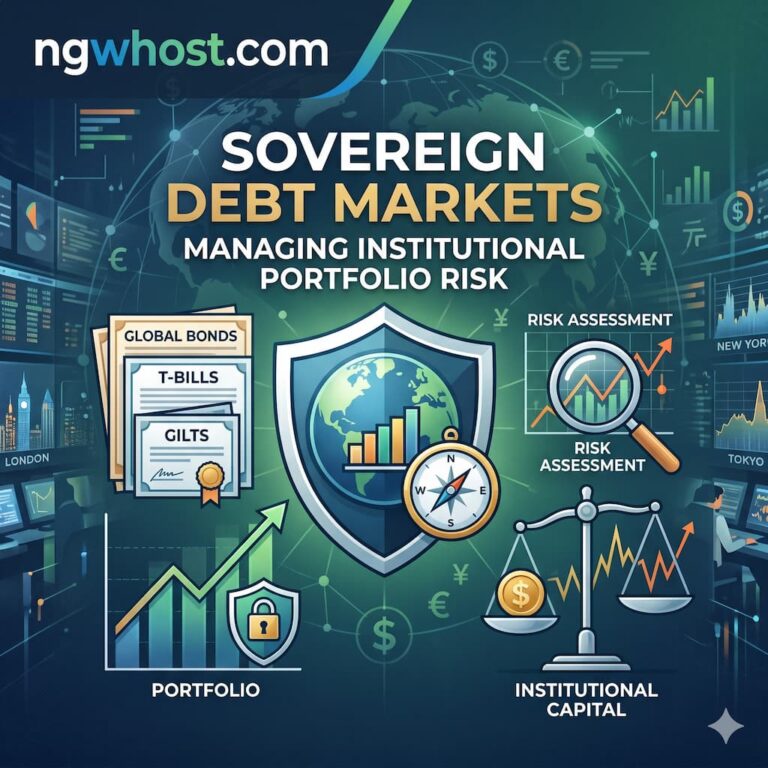

Sovereign Wealth Funds: Strategies for Global Asset Allocation
Sovereign Wealth Funds (SWFs) represent the ultimate tier of institutional capital accumulation. Tasked with managing multi-billion-dollar—and increasingly multi-trillion-dollar—national resource surpluses, fiscal reserves, and generational savings, these state-owned investment vehicles occupy a unique position in global financial ecosystems. Unlike traditional pension funds, which face strict near-term liability matching constraints, or private equity allocators, who operate within rigid fund lifecycle structures, SWFs often possess an infinite investment horizon.
This multi-generational mandate grants sovereign allocators an extraordinary structural advantage: the capacity to absorb short-term market illiquidity, deploy patient capital into systemic mega-trends, and function as stabilizing liquidity providers during macroeconomic crises.
However, the global investment horizon has grown immensely complex. The historical sovereign playbook, which relied on passive allocations to Western government bonds and blue-chip domestic equities, is structurally insufficient to navigate modern market realities.
SWFs are managing capital amid escalating geopolitical fragmentation, changing currency alignments, the rise of sovereign-directed industrial policies, and rapid transitions toward green energy infrastructures.
Furthermore, as state entities, SWFs operate at the intersection of international finance and geopolitics. Their allocation decisions are heavily scrutinized by domestic stakeholders demanding localized economic growth, as well as foreign regulatory regimes enforcing strict national security reviews on inbound sovereign investments.
To safeguard national wealth and maximize real returns, sovereign fund architects must transition from static allocation models to highly adaptive, multi-asset global deployment strategies.
1. The Typographical Spectrum: Aligning Mandate with Allocation Design
An asset allocation strategy cannot be designed in a vacuum; it must be derived directly from the explicit state mandate of the specific Sovereign Wealth Fund tier. SWFs generally operate within four primary functional categories, each requiring a fundamentally different liquidity and risk-tolerance matrix.
A. Stabilization Funds
Stabilization funds are designed to insulate a nation’s domestic economy and fiscal budget from catastrophic commodity price volatility (e.g., sudden plunges in crude oil, natural gas, or mineral export revenues).
- The Allocation Blueprint: Because these funds must be accessed rapidly during economic contractions, their asset allocation is heavily tilted toward short-term, liquid, cash-equivalent instruments, high-grade sovereign debt, and defensive multi-currency reserves. Capital preservation and instant liquidity take precedence over maximizing long-term returns.
B. Future Generations Funds
Future generations funds are engineered to convert non-renewable state natural resources into a permanent, diversified stream of international financial wealth to sustain the nation once the physical resource is depleted.
- The Allocation Blueprint: Operating with an absolute long-term horizon, these funds display an aggressive risk tolerance. Their asset matrices deprioritize liquid short-term instruments in favor of high-yield private markets, early-stage venture ecosystems, premium global equities, and direct cross-border infrastructure holdings.
C. Sovereign Development Funds (Strategic SWFs)
These hybrid vehicles are explicitly tasked with a dual mandate: generating commercial financial returns while simultaneously funding domestic infrastructure projects, industrial modernization, and domestic technological capabilities.
- The Allocation Blueprint: Allocation strategies here focus heavily on co-investments, vertical joint ventures with international technology providers, and deep direct equity stakes in domestic aerospace, semiconductor, or green energy supply chains.
D. Reserve Investment Funds
Often carved out from excess central bank foreign exchange reserves, these funds seek to reduce the opportunity cost of holding massive liquid dollar or euro deposits by investing in higher-yielding global capital market instruments.
- The Allocation Blueprint: They maintain a balanced portfolio structure, blending high-liquidity fixed-income instruments with diversified, global large-cap equity trackers.
2. Structural Realities: Shifting Beyond the Traditional Portfolio
For decades, the foundation of institutional portfolio construction was the classic 60/40 model—allocating 60% of capital to public equities and 40% to fixed-income bonds. In an era of shifting global interest rates, stubborn inflationary pressures, and high cross-asset correlations, this static framework introduces significant vulnerability. Large-scale SWFs have pioneered a structural migration toward alternative asset categories.
The Rise of the “Endowment Plus” Sourcing Framework
Modern SWF allocation strategies deploy significant weightings into highly illiquid private assets, mirroring the historical Ivy League endowment models but executing them at an institutional sovereign scale.
- Private Equity and Direct Co-Investments: Rather than allocating capital solely to traditional third-party fund structures—which extract high management fees—SWFs are building massive internal deal-sourcing teams. By deploying capital via direct co-investments alongside global private equity giants, sovereign funds can command seats on corporate boards, secure preferential allocation rights, and eliminate fee layers on large-scale cross-border acquisitions.
- Global Infrastructure and Real Asset Monopolies: SWFs look to secure long-term, inflation-protected cash flows by acquiring direct ownership stakes in critical real estate and public infrastructure assets: maritime shipping container ports, overland rail tracks, regulated electricity transmission grids, utility networks, and automated logistics hubs. These assets possess massive entry barriers, provide predictable yields, and operate as core structural hedges against long-term fiat currency depreciation.
3. Geopolitical Risk Management and the Splintering of Global Corridors
Because Sovereign Wealth Funds represent the investment arm of nation-states, their international operations are inherently political. The modern financial landscape is characterized by a definitive splintering of traditional trade and capital routes.
Navigating Regulatory Protectionism and Inbound Investment Barriers
Sovereign funds face tightening regulatory scrutiny when deploying capital into developed Western economies. Regulatory bodies—such as the Committee on Foreign Investment in the United States (CFIUS) and equivalent foreign direct investment (FDI) clearance systems across the European Union—actively flag and restrict sovereign acquisitions targeting critical national security sectors, including semiconductor foundries, artificial intelligence infrastructure, biometric healthcare databases, and aerospace manufacturing networks.
To mitigate this operational risk, SWFs utilize an asset-diversification strategy that favors non-controlling equity stakes, joint ventures with local domestic corporations, or reallocating capital blocks toward the high-growth corridors of the Global South—including the GCC region, Southeast Asia, and rapidly modernizing Latin American supply hubs—where regulatory friction against sovereign capital is lower.
4. Analytical Performance: Comparative Allocation Matrix Across SWF Portfolios
To analyze how multi-billion-dollar sovereign vehicles balance risk against their underlying state mandates, we can evaluate a structural asset allocation matrix across the primary fund categories.
| Strategic Asset Class | Stabilization Fund | Future Generations Fund | Sovereign Development Fund |
| Short-Term Cash & T-Bills | 40% – 60% (Hyper-Liquid) | 2% – 5% (Frictional Only) | 5% – 10% (Working Capital) |
| Global Developed Public Equities | 20% – 30% (Large-Cap Index) | 35% – 45% (Multi-Factor Alpha) | 10% – 15% (Strategic Stakes) |
| Emerging Market Securities | 5% – 10% (Highly Liquid Nodes) | 15% – 20% (High-Growth Captured) | 5% – 10% (Regional Trade Links) |
| Private Equity & Venture Capital | 0% (Prohibitively Illiquid) | 15% – 25% (Direct & Fund Co-Invest) | 20% – 30% (Industrial Shifting) |
| Infrastructure & Real Assets | 0% – 5% (Yield Hedges Only) | 10% – 20% (Portals & Core Utilities) | 40% – 50% (Domestic Multi-Year CapEx) |
5. Technology Layer: Orchestrating Sovereign Portfolios via Advanced Analytics
Managing a multi-asset portfolio that spans multiple time zones, currencies, and regulatory boundaries manually is an operational impossibility. Modern SWFs are scaling their operations by deploying institutional-grade Investment Data Lakehouses integrated with real-time predictive analytics.
Multi-Variable Risk Factor Modeling and Stress Simulation
Sovereign treasuries integrate centralized enterprise systems to gather real-time telemetry across all public and private assets simultaneously. These analytical pipelines process dense data sets to model systemic exposure vectors:
- Currency Variance Telemetry: Simulating the impact of sudden currency devaluations across emerging market bond holdings.
- Commodity Price Correlation Feedback Loops: Evaluating how a sudden 30% drop in domestic crude oil prices will alter the liquidity requirements of the country’s broader stabilization pool.
- Geopolitical Shock Mapping: Running automated simulations to test how sudden regional trade embargoes or naval corridor closures will affect the cash-flow generation metrics of global shipping infrastructure investments.
By processing these scenarios through multi-variable analytics models, the fund’s risk committee can proactively adjust hedging allocations, rebalance multi-currency positions, and maintain a highly defensive risk posture before market shifts happen.
6. Sustainable Sovereignty: The Green Energy Capital Shift
A major trend defining modern SWF allocation strategy is the systematic integration of Environmental, Social, and Governance (ESG) frameworks into core investment decision loops. As institutional capital pools face global climate transition goals, sovereign funds are transforming from passive observers into active anchors of the green economy transition.
SWFs optimize this structural transition by deploying multi-billion-dollar blocks directly into large-scale renewable energy infrastructure projects, including offshore wind networks, utility-scale solar arrays, and regional hydrogen production facilities.
Furthermore, sovereign allocators enforce strict climate-compliance scorecards across their public equity portfolios. They demand that multinational corporations present transparent carbon-reduction pathways, actively voting their proxy shares to hold corporate boards accountable. This strategic alignment addresses long-term environmental objectives while mitigating the risk of stranded assets in legacy carbon-heavy sectors.
Read More⚡ Quantitative Trading: AI Algorithms in Institutional Finance
Conclusion: Engineering the Generational Capital Shield
The optimization of a Sovereign Wealth Fund’s global asset allocation strategy is a continuous, high-stakes exercise in balancing financial agility with state governance parameters. The traditional paradigms of relying on static, regional public market allocations are wholly insufficient to survive the volatility of modern global finance.
To thrive in tomorrow’s multipolar economic landscape, sovereign fund architects must build highly diversified, multi-asset portfolios anchored by deep allocations into private alternative markets, real infrastructure monopolies, real-time risk telemetry engines, and clear ESG compliance filters.
Ultimately, the sovereign funds that successfully master this allocation equilibrium will secure an enduring competitive edge. They do more than simply generate investment returns; they forge an unassailable generational financial shield capable of preserving state wealth, driving domestic industrial progress, and funding the long-term economic prosperity of their nations across any digital and geopolitical horizon.
Deploying massive sovereign data lakehouses, multi-variable portfolio risk engines, and global real-time telemetry networks requires high-performance, secure, and zero-downtime server infrastructure. Secure your institution’s digital core on a bulletproof foundation by exploring the premium enterprise hosting configurations at ngwhost.com.