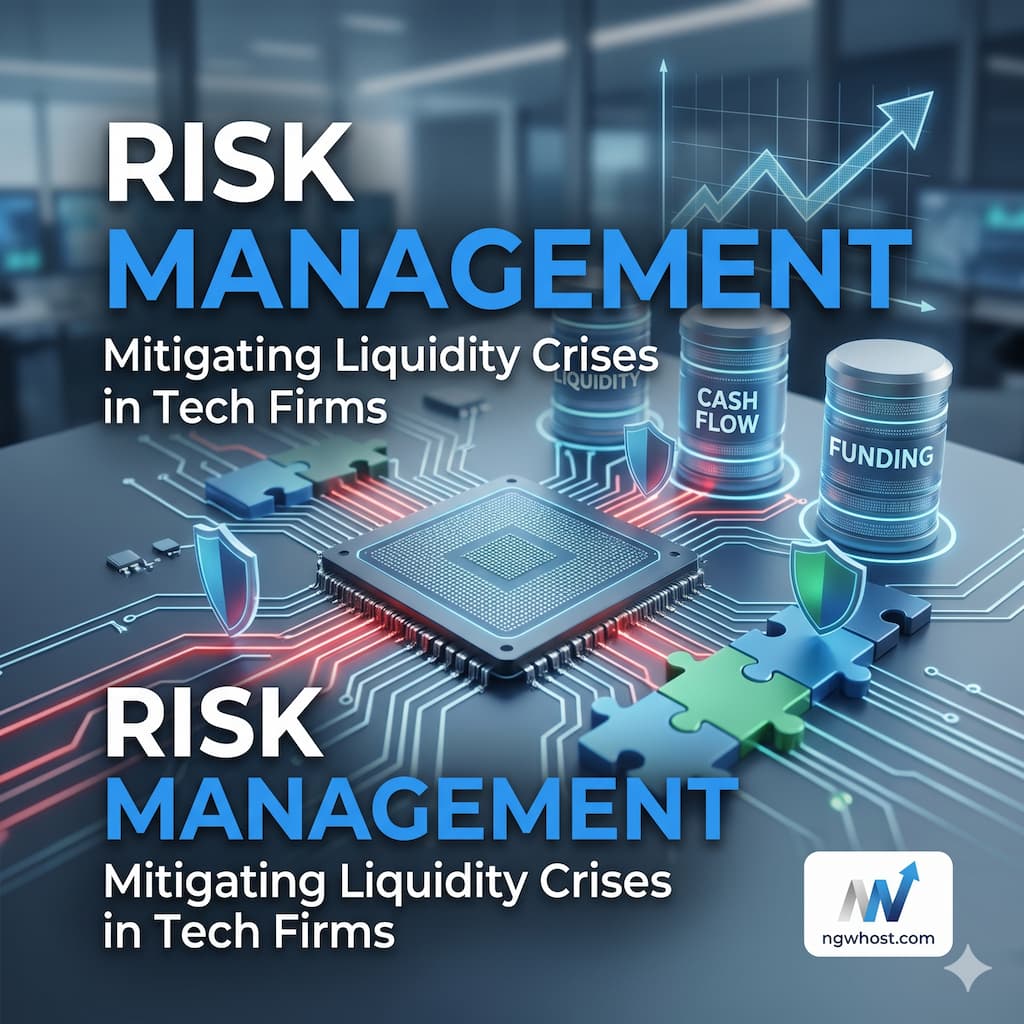
Risk Management: Mitigating Liquidity Crises in Tech Firms
The financial architecture governing hyper-growth technology companies, venture-backed enterprise platforms, and cloud-scale digital operators is confronting a profound, structural breakpoint. For over a decade, technology executive boards, corporate treasurers, and financial officers operated within a highly deterministic macroeconomic paradigm. Capital deployment pipelines relied on historic, hyper-liquid financing environments, low-cost capital access rails, predictable venture capital tranches, and compressed burn-rate benchmarks to fund product development, geographic expansion, and aggressive market consolidation.
Today, that traditional, low-friction paradigm has hit a definitive technological and economic barrier.
Modern digital enterprises process massive transactional velocities and manage globally distributed operational pipelines while navigating compressed macroeconomic liquidity cycles, shifting investor risk tolerances, and sudden contractions in institutional credit networks.
In this high-velocity operational reality, capital management has evolved from a discrete, backward-looking quarterly accounting review into a real-time survival metric.
Relying on traditional financial tracking mechanisms and lagging balance-sheet reviews introduces severe, non-negotiable systemic risks. Traditional point-in-time cash tracking leaves corporate treasuries completely blind to active burn-rate fluctuations, unoptimized asset allocation layouts, and short-term capital mismatch drift.
This oversight delay results in catastrophic working capital shortfalls, unexpected credit line freezes that erode market confidence, and severe organizational friction between engineering execution and fiduciary stakeholders.
To eliminate this operational friction, minimize cash-drag leakage, and secure an absolute cash-readiness moat, progressive tech enterprises are overhauling their corporate defense perimeters. They are abandoning ad-hoc transactional scripts and deploying comprehensive Intelligent Corporate Risk Management and Liquidity Orchestration Control Planes.
Far from an optional administrative patch or a basic spreadsheet model, building a modern, production-grade liquidity shield combines high-throughput multi-source financial telemetry ingestion, non-linear stochastic asset-liability simulation networks, automated cash-runway policy-as-code validation, and hardware-insulated confidential computing infrastructures straight into the enterprise IT and ERP governance core.
1. The Core Paradigm Shift: From Descriptive Cash Tracking to Real-Time Value Forecasting
To build a highly resilient financial core capable of sustaining product development pipelines safely across turbulent global horizons, Chief Financial Officers (CFOs), corporate treasurers, and engineering directors must transform their core cash-management philosophy. The enterprise must transition past lagging, retrospective ledger rollups and move toward continuous, real-time capital orchestration and foresight.
 [Legacy Cash Model]: Trailing Bank Snapshots ──> Manual Reconciliation ──> Lagging Quarterly Runway Estimates
 [Predictive FinOps]: Streaming Financial Ingestion ──> Stochastic Simulation ──> Real-Time Runway Adjustment
- Legacy Capital Management Frameworks: Function within a reactive topology. Corporate finance teams inspect consolidated banking snapshots and manual cash-flow statements weeks after a fiscal period concludes, attempting to calculate runway positions and manually dialing down department budgets long after the operational financial leakage has occurred.
- The Automated Risk Orchestration Fabric: Reconfigures this oversight framework completely. It establishes a continuous, real-time data orchestration layer that unifies live banking ledger APIs, granular enterprise resource planning (ERP) system registries, open-market credit indicators, and departmental operational burn-rate metrics into an active, centralized liquidity observability engine.
By executing automated pattern scanning, multi-dimensional burn-rate analysis, and programmatic cash-allocation tracking right at the consumption boundary, intelligent risk networks permanently eliminate financial risk latency.
The treasury operation transitions from a slow-moving administrative reporting loop into an active strategic armor designed to predict working capital shocks, track cost-per-business-metric ratios, and optimize cross-entity asset configurations weeks before an operational distortion hits the balance sheet.
2. Core Pillars of an Institutional Liquidity Defense Infrastructure
Constructing an enterprise-grade corporate risk management platform capable of scaling safely across multi-tenant cloud operations and multi-jurisdictional subsidiaries requires a robust technology layer anchored by four foundational engineering pillars.
Pillar I: High-Throughput Financial Ingestion and Feature Normalization Factories
The ultimate forecasting accuracy of any machine learning risk engine and its capacity to prevent unexpected liquidity depletion depend entirely on the volume, consistency, and real-time ingestion velocity of the data pipelines feeding its processing loops.
Systems architects deploy automated real-time data orchestration pipelines connected straight to enterprise bank lockboxes via secure Open Banking APIs, treasury management interfaces, localized merchant clearinghouses, and cross-border billing systems. The ingestion factory normalizes unstructured financial and transactional telemetry—including fluctuating multi-currency exchange rates, rolling subscription invoice creation velocities, and automated accounts receivable depletion logs—into a standardized, low-latency data schema. This continuous data harvest feeds a centralized, enterprise-grade Financial Feature Store that unifies raw tracking events into a single, uncorrupted source of truth for both online real-time cash runway inference and offline predictive simulation loops, completely preventing data mapping skews.
Pillar II: Algorithmic Non-Linear Cash Run-Out Classification Ensembles
Traditional technology underwriting and corporate procurement structures segment treasury risks using basic, rigid linear run-rate scorecards, frequently failing to map complex, non-linear relationships across thousands of alternative operational and cloud infrastructure data variables.
Enterprise data science teams deploy optimized Cash Flow Classification Ensembles built on advanced gradient-boosting machines paired with deep neural network architectures and explainable machine learning frameworks (such as SHAP values). The anomaly detection core processes thousands of distinct input features simultaneously—including a technology company’s vendor concentration variance, trailing software infrastructure cost-per-user elongation metrics, customer churn velocity indicators, and external micro-sector credit indices. The engine applies ensemble learning models to calculate an adaptive, dynamic probability of cash-runway compression that updates programmatically as new data points flow through the ingestion pipelines.
Pillar III: Stochastic Asset-Liability Simulators and Macro Stress Testing
Maintaining an unassailable financial and operational perimeter requires the corporate risk management core to continuously evaluate its systemic resilience against sudden, catastrophic macroeconomic or market disruptions.
The infrastructure integrates advanced Stochastic Simulation Engines that run millions of continuous, automated cash-drain and credit stress tests over the prospective enterprise portfolio concurrently. The system models how organizational cash runway boundaries, debt-servicing requirements, customer subscription retention rates, and product development pipelines would perform under severe operational and market disruptions: an abrupt spike in central bank benchmark interest rates, an extended localized banking infrastructure failure, sudden shifts in cross-border currency values, or a massive expansion of distributed analytical database query costs across the technology stack. If a simulation reveals that a potential software architecture configuration risks pushing the entity’s cash runway below critical safety boundaries, the platform generates automated optimization alerts, allowing risk officers to adjust structural capital alignment paths proactively.
Pillar IV: Programmatic Capital Call Automation and Emergency Buffering
Waiting for traditional monthly corporate billing reviews or manual executive intervention to reallocate asset reserves, draw down revolving credit lines, or adjust vendor payment priorities exposes the enterprise to massive, unhedged financial risk windows during periods of rapid venture market contraction.
Operations groups deploy an automated Capital Call and Emergency Buffering Orchestration Engine connected straight to live banking ledgers, automated clearinghouse systems, and short-term liquidity pools. The framework monitors organizational connection metrics continuously against adaptive risk-threshold parameters.
If the analytical engine isolates an uncharacteristic anomaly—such as a non-linear drop in daily transaction processing volumes combined with an uncharacteristic modification in customer subscription renewal cycles—it triggers an immediate automated protection playbook.
The framework bypasses manual validation queues and executes an automated response playbook: it programmatically triggers localized asset-rebalancing scripts to unlock alternative liquid buffers, scales down non-essential cloud compute instances via automated serverless commands, and alerts corporate treasury leadership for proactive strategic intervention, minimizing the operational blast radius of a potential liquidity crunch in seconds.
3. High-Performance Optimization: The Treasury Risk Strategy Ledger
Transitioning an enterprise technology framework from uncoordinated manual accounting sheets to an automated, scaled predictive financial risk architecture fundamentally redefines an organization’s capital allocation efficiency and portfolio resilience benchmarks.
| Performance Parameter | Legacy Accounting & Spreadsheets | Scaled Real-Time Risk Core |
| Runway Forecasting Latency | Weeks or months of trailing post-period manual collation | Real-time, instant sub-second calculation loops |
| Data Visibility Ingestion | Trailing, snapshot quarterly or annual reviews | Live, continuous Open Banking and ERP streaming |
| Model Adaptability Engine | Rigid, manual spreadsheet formula updates every year | Automated MLOps retraining and concept drift checks |
| Risk-Attribution Explainability | High dependence on subjective analyst judgment | Transparent, compliant mathematical feature mapping |
| Structural Capital Drag | High; bloated idle cash buffers to cover unexpected cuts | Slashed liquidity drag, unlocking up to 35% cash efficiency |
4. Real-World Applications: Risk Mitigation in Active Tech Arenas
Evaluating how advanced risk optimization and simulation platforms perform under complex, real-world corporate technology scenarios highlights their critical role in maximizing asset utilization and safeguarding global shareholder value.
Real-Time Burn Rate Stabilization and Automated Operational Throttling
Consider a hyper-scale artificial intelligence aggregator and infrastructure platform that coordinates massive model retraining loops, distributed vector processing clusters, and multi-cloud API clearing networks serving enterprise clients globally. Because the platform executes computationally intensive workflows daily across multiple public cloud networks, its underlying infrastructure cost profiles and compute resource consumption metrics fluctuate wildly, creating intense financial forecasting and liquidity management challenges across the organization’s treasury stack.
During an intense software integration update, an unoptimized application deployment initiates an unexpected recursive loop across a secondary database staging environment. Within hours, the loop drives a massive, non-linear spike in processing data logs, threatening to consume hundreds of thousands of dollars in unhedged compute infrastructure fees before the billing cycle concludes.
For an unhedged enterprise reliant on traditional, slow-moving manual billing reviews, this sudden software cost spike results in immediate cash runway erosion. Financial managers remain completely blind to the distress until the next consolidated multi-cloud billing invoice arrives weeks later, resulting in massive, unhedged margin compression.
The intelligent enterprise completely neutralizes this systemic threat by anchoring its multi-cloud fabric to an automated risk management and FinOps control plane. The platform monitors machine performance metrics, cloud data movement streams, and billing data continuously.
The moment the machine learning anomaly engine isolates the unmeasured billing velocity, it calculates the projected cash runway degradation impact instantly.
The platform executes an automated adaptation playbook: it programmatically triggers an API command to suspend the specific unoptimized database function, switches transient analytical query loads to lower-cost reserved computing nodes, and notifies the engineering leads with exact system code line references. This real-time response keeps the global infrastructure fully aligned with corporate liquidity budgets, prevents expensive invoicing shocks, and protects enterprise capital from operational leakage.
Proactive Subscription Tracking and Asset Optimization for Enterprise SaaS Entities
A high-growth enterprise software-as-a-service (SaaS) provider delivers complex, distributed product suites to corporate clients internationally. Enterprise client procurement cycles, customer acquisition costs, and monthly recurring revenue (MRR) metrics fluctuate depending on shifting market sentiment, seasonal budget cycles, and macroeconomic rate contractions, introducing structural cash-flow volatility across the developer’s ledger pools.
The corporation stabilizes its operating cash runways and maximizes long-term portfolio yields by anchoring its core financial management to an automated stochastic simulation framework. The platform connects directly to active payment gateways, customer relationship systems, and bank infrastructure registries via secure enterprise APIs.
Using advanced multi-variable non-linear simulation engines running continuously, the system projects future customer churn velocities and contract renewal metrics weeks ahead with high mathematical precision.
If the model projects an upcoming contraction in short-term subscription renewals based on real-time enterprise market sentiment indicators, the engine automatically adjusts corporate resource tracks.
The system programmatically dials down non-essential operational expenditure paths, expands short-term liquid capital buffers, and optimizes accounts receivable tracking loops—protecting corporate capital reserves from unexpected funding strains while maximizing overall cash efficiency.
5. Security Architecture for Hardened Financial Risk Control Planes
Centralizing global corporate accounting records, integrating live enterprise banking data lakes, tracking predictive default models, and automating API-driven capital allocation pathways introduces intense data privacy and infrastructure security requirements. Because advanced financial risk platforms manage the direct movement of global corporate capital and hold highly sensitive enterprise intelligence, they represent top-tier targets for advanced persistent threat networks, corporate espionage rings, and targeted financial fraud syndicates.
Implementing Anonymized Feature Tokenization across Financial Ingestion Pipelines
To train predictive risk models, evaluate factor analysis, and execute large-scale lookalike portfolio clustering safely without violating global data privacy directives (such as GDPR or CCPA) or exposing proprietary corporate trade secrets to public network observers, organizations must implement a robust data perimeter.
Systems architects deploy an automated data tokenization proxy directly at the front edge of the financial data ingestion pipeline. Before any ledger file, bank statement, or transaction log is written to the central predictive data lakehouse, all sensitive personal fields and specific corporate partner identifiers are automatically extracted, cryptographically hashed, and replaced with secure tokens. The quantitative models and risk-attribution engines execute their pattern-recognition calculations over anonymized financial metadata, maintaining total data utility while ensuring absolute corporate data privacy across all regional entities.
Hardening the Processing Core via Enclave Isolation and Quorum Controls
Because the centralized predictive risk optimization core commands the absolute authority to analyze funding requests, alter capital allocation strategies, and execute automated account changes via API links, accessing this administrative engine requires extreme security constraints.
- Enclave Isolation: Isolate the entire quantitative modeling core, analytics databases, and API configuration consoles inside a strict Zero-Trust Network Access (ZTNA) envelope. Every corporate account, data-scientist terminal, and internal software integration must undergo continuous multi-factor authentication, rigorous automated behavioral risk screening, and endpoint device posture assessments before gaining access to the platform interface. The data repositories must execute within hardware-isolated Confidential Computing Enclaves equipped with hardware-level memory encryption, keeping all enterprise credit insights completely insulated from unauthorized lateral access, internal insider threats, or external data exploitation at all times.
- Quorum Controls: Corporate technology boards must guarantee that any structural alteration to global asset allocation parameters, modification of automated remediation boundaries, or authorization of programmatic system adjustments requires concurrent cryptographic confirmation from a distributed quorum of verified security officer keys across completely isolated network environments, preventing single points of system vulnerability from compromising the data infrastructure core.
6. Structural Convergence: Adhering to Global Capital Tracking Frameworks
Scaling a comprehensive corporate risk management and liquidity optimization framework across international borders requires absolute compliance with an evolving web of international corporate governance, institutional accounting mandates, and financial tracking standards.
- The Sarbanes-Oxley (SOX) Act Compliance: Publicly traded financial corporations and enterprise technology networks must present rigorous, auditable internal controls and well-documented workflow histories covering all automated computing assets used to process or store corporate financial data, making the deployment of automated change management tracking, immutable log records, and verified user access histories a direct regulatory necessity.
- The IFRS 9 / GAAP Asset Evaluation Invariants: Global accounting frameworks require technology corporations to utilize forward-looking financial evaluation and asset classification metrics, demanding the integration of continuous multi-source data ingestion streams and stochastic forecasting models to back up outstanding asset-impairment declarations.
- The AICPA Trust Services Criteria (SOC 2 Type II): Rigorous international auditing frameworks demand that digital asset funds, custody providers, and web3 infrastructure platforms maintain verifiable operational security controls covering all active computing systems, requiring enterprise environments to present continuous data tracking pipelines, automated change management logs, and verifiable access restriction histories.
Read More⚡ Asset Allocation: Managing Institutional Capital in Tech Funds
Conclusion: Engineering the Unassailable Corporate Liquidity Shield
The deployment of a modern, data-driven predictive corporate risk management and liquidity control plane is not an optional optimization update for high-growth tech firms and global digital platforms; it is a fundamental technological requirement to navigate tomorrow’s hyper-connected, high-velocity economic arena. The historical strategy of managing multi-million-dollar technology fund portfolios and institutional capital allocations through slow, human-centric committees and trailing spreadsheet reviews—while tolerating severe data latency, manual underwriting friction, and volatile burn-rate exposures—is an unsafe operational approach that invites market displacement, massive equity destruction, and catastrophic balance-sheet erosion.
By engineering an integrated, forward-looking financial fabric built on high-throughput real-time financial data ingestion pipelines, advanced machine learning classification ensembles, stochastic portfolio stress-testing engines, and automated capital allocation playbooks, progressive enterprise leaders transform their risk functions from passive tracking nodes into high-performance strategic weapons.
Ultimately, the definitive advantage in the global commercial ecosystem belongs entirely to the visionary enterprise leaders that can evaluate risks, optimize asset structures, and deploy capital as fast as the market moves—mastering advanced predictive analysis frameworks to drive secure, highly efficient, and market-leading global scale across any operational horizon.
Deploying computationally intensive machine learning risk engines, high-throughput financial data lakehouses, real-time capital structure optimization models, and ultra-secure automated asset protection frameworks requires world-class, zero-downtime server infrastructure. Secure your company’s digital corporate risk management engine on an unassailable infrastructure foundation by exploring the premium enterprise hosting configurations at ngwhost.com.