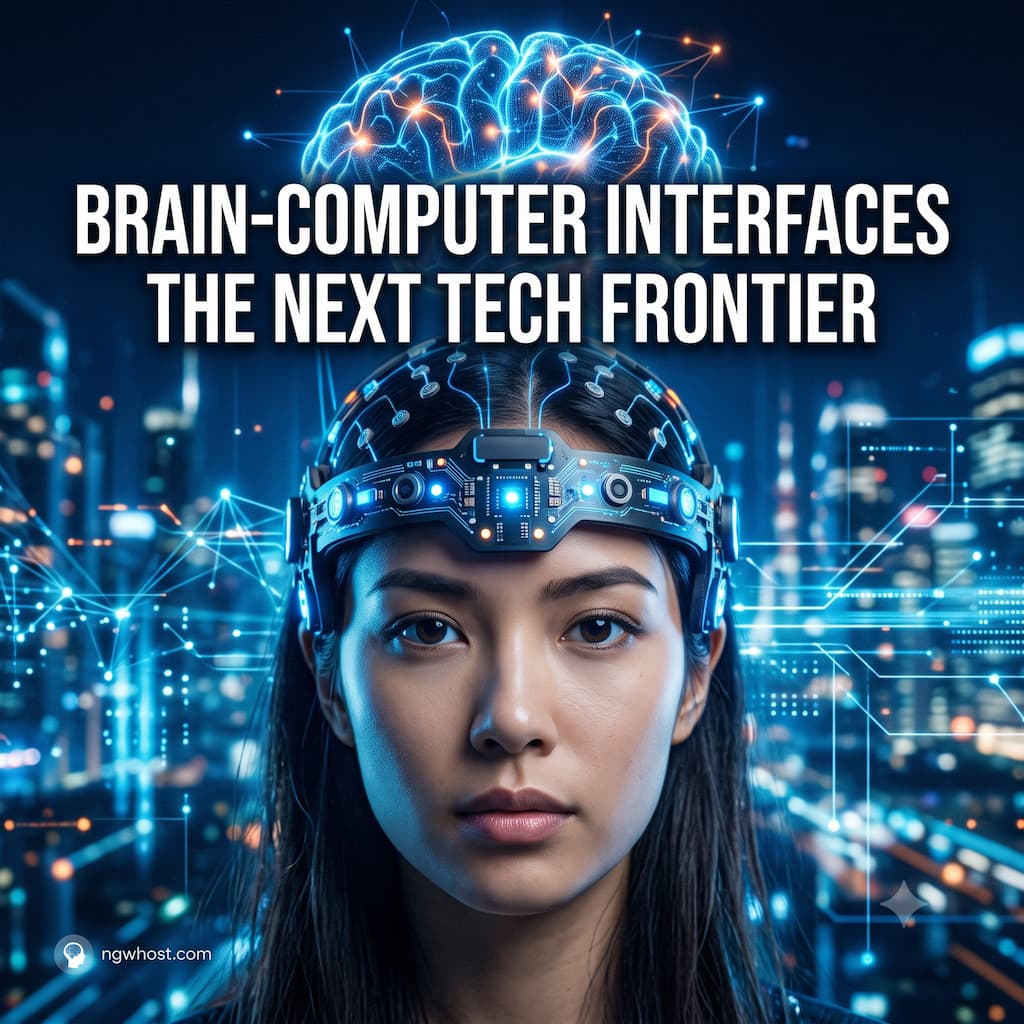
Brain-Computer Interfaces: The Next Tech Frontier
For decades, human interaction with technology has been bounded by physical input mechanisms. We moved from punch cards and command-line interfaces to graphical user interfaces, computer mice, touchscreens, and voice recognition systems. Yet, regardless of how fast we type, how fluidly we swipe, or how clearly we speak, a fundamental bottleneck remains: human motor output is extraordinarily slow compared to the processing speeds of modern computing hardware. Our thoughts fire across complex neural networks at biological velocity, only to be compressed into clumsy physical movements across keyboards, glass panels, or microphone arrays.
That mechanical limitation is facing imminent displacement.
Driven by breakthroughs in micro-electro-mechanical systems (MEMS), high-density electrode arrays, real-time signal processing algorithms, and advanced machine learning models, Brain-Computer Interfaces (BCIs) have crossed the threshold from speculative science fiction into high-throughput computing reality.
A Brain-Computer Interface establishes a direct, bidirectional communication corridor between the biological neural circuits of the human brain and external digital processing units.
By capturing, decoding, and translating bioelectric activity straight into computational commands—and returning sensory feedback via direct neural stimulation—BCIs bypass physical motor pathways entirely.
This post analyzes the neurophysiological mechanics of neural decoding, compares invasive and non-invasive hardware architectures, evaluates medical and enterprise applications, and examines the critical cloud infrastructure required to host high-consequence neurotech data streams on ngwhost.com.
1. The Neurophysiological Mechanics: Decoding the Language of the Brain
To understand how a computing system translates human thought into digital execution, one must examine the fundamental electrical signals that power the human central nervous system.
The human brain consists of approximately 86 billion neurons interconnected by trillions of synaptic pathways. Every sensory perception, cognitive calculation, emotional state, and motor intention generates localized flows of ion currents across neuronal cell membranes. These continuous electrochemical shifts produce minuscule voltage fluctuations known as action potentials (spike trains) and local field potentials (LFPs).
A Brain-Computer Interface functions through a four-stage digital pipeline:
Signal Acquisition
Sensors positioned on the scalp, underneath the skull, or implanted directly inside the cerebral cortex detect raw bioelectric voltage fluctuations generated by active neural ensembles.
Signal Processing and Noise Filtering
Raw neural data streams are exceptionally noisy, contaminated by muscular movements (electromyographic noise), cardiac rhythms, and ambient electromagnetic interference. Advanced digital signal processing (DSP) filters—including bandpass filters, fast Fourier transforms (FFT), and principal component analysis (PCA)—clean the signal, isolating specific biological frequency bands (such as alpha, beta, gamma, and theta waves) or discrete single-unit neural spikes.
Feature Extraction and Neural Decoding
Once filtered, machine learning algorithms analyze the processed neural signals to extract meaningful patterns.
Deep neural networks, recurrent neural networks (RNNs), and transformer architectures map complex multidimensional neural firing patterns onto specific intent classes—such as moving a cursor across a screen, selecting a letter on a digital keyboard, or synthesizing intended speech vectors.
Device Execution and Feedback Loops
Decoded commands are dispatched instantly to target applications—such as robotic prosthetics, computer operating systems, or digital speech synthesizers.
In closed-loop BCI systems, tactile or visual feedback is returned to the user via biological senses or direct sensory cortex micro-stimulation, allowing the brain to adapt its neural output dynamically through neuroplasticity.
2. Hardware Architectures: Invasive, Non-Invasive, and Endovascular Systems
The primary engineering trade-off in BCI design centers on the physical proximity of the recording sensors to active cortical neurons. This spatial relationship dictates signal resolution, noise levels, long-term biocompatibility, and surgical risk profiles.
BCI hardware falls into three distinct structural categories:
Non-Invasive Systems (Surface EEG and fNIRS)
Non-invasive BCIs record neural activity from outside the human skull. The most prevalent technology, Electroencephalography (EEG), utilizes comfortable electrode arrays placed across the scalp.
- Advantages: Absolute surgical safety, low cost, easy deployment, and zero risk of physical tissue degradation or infection.
- Limitations: The physical bone structure of the skull and surrounding skin layers act as severe low-pass spatial filters, diffusing high-frequency electrical signals. Non-invasive systems suffer from low spatial resolution and high signal noise, restricting their utility to basic state monitoring, focus tracking, or simple low-velocity cursor controls.
Invasive Systems (Intracortical Microelectrode Arrays)
Invasive BCIs place ultra-thin, flexible electrode threads or silicon needle arrays (such as the Utah Array) directly into the outer layers of the cerebral cortex via specialized neurosurgical procedures or robotic surgical suites.
- Advantages: Unrivaled signal fidelity, high spatial resolution, and low signal noise. Invasive electrodes record single-neuron action potentials (spikes) directly from the source, enabling high-speed real-time decoding of complex motor intentions, fine motor hand controls, and rapid digital speech synthesis.
- Limitations: Involves neurosurgical risks, potential long-term tissue inflammation, and foreign-body biological responses (glial scarring) that can degrade single-unit electrode signal sensitivity over time.
Endovascular Systems (Stent-Electrode Arrays)
Endovascular BCI technology represents an innovative hybrid approach. Unobtrusive electrode arrays (such as the Stentrode) are navigated through the venous system via minimally invasive vascular catheterization and parked inside major blood vessels located adjacent to the primary motor cortex.
- Advantages: Eliminates the need for open craniotomy or direct brain tissue penetration while achieving significantly higher signal-to-noise ratios than external scalp EEG systems.
- Limitations: Lower spatial resolution than direct intracortical arrays, though sufficient for robust digital interface navigation and assistive device control.
3. Structural Optimization Ledger: Hardware Modalities Compared
Evaluating the performance and operational parameters that separate non-invasive, endovascular, and invasive BCI hardware architectures highlights the engineering trade-offs governing modern neurotechnology deployments.
Non-Invasive (Scalp EEG / fNIRS)
- Signal Fidelity & Spatial Resolution: Low spatial resolution; high signal diffusion caused by the skull.
- Surgical Risk Profile: Non-surgical; zero physical risk.
- Primary Target Applications: Focus tracking, consumer gaming, basic neurofeedback, sleep analysis, and simple binary control loops.
Endovascular (Stent-Electrode Arrays)
- Signal Fidelity & Spatial Resolution: Moderate spatial resolution; positioned inside cerebral blood vessels.
- Surgical Risk Profile: Minimally invasive catheterization; avoids direct open brain surgery.
- Primary Target Applications: Hands-free operating system navigation, assistive communication, and digital wheel-chair control.
Invasive (Intracortical Microelectrode Arrays)
- Signal Fidelity & Spatial Resolution: Exceptional spatial resolution; single-unit neural spike recording directly from cortical layers.
- Surgical Risk Profile: Requires neurosurgical implantation; carries long-term biological tissue integration considerations.
- Primary Target Applications: High-speed speech synthesis, restoration of complex multi-axis limb motor control, and continuous digital device operation.
4. Transformative Use Cases: Medicine, Human Augmentation, and Beyond
As BCI technology matures, its operational footprint is expanding beyond clinical clinical research labs into mainstream medical therapy, human augmentation, and immersive digital platforms.
Medical Neurorehabilitation and Assistive Tech
The most urgent and profound application of BCIs lies in restoring autonomy to individuals suffering from severe motor disruptions, amyotrophic lateral sclerosis (ALS), spinal cord injuries, or brainstem strokes.
- Digital Thought-to-Speech Translation: High-density invasive arrays implanted in speech motor areas allow paralyzed individuals to synthesize natural voice streams in real time simply by imagining the movements required to speak. Decoders translate neural intent directly into text or natural audio output at near-conversational speeds.
- Restoration of Mobility and Touch: By pairing intracortical BCI recording implants in the motor cortex with functional electrical stimulation (FES) systems or advanced robotic exoskeletons, paralyzed patients can control biological limbs or external prosthetics. Bidirectional neural interfaces return artificial tactile sensations directly to the somatosensory cortex, restoring the sense of physical touch.
Human Augmentation and Hands-Free Computing
As BCI hardware becomes less intrusive and digital decoding software scales, brain-computer interfaces will redefine general computing interfaces.
- Zero-Latency Spatial Computing: In extended reality (VR/AR) environments, BCIs remove the need for physical handheld controllers or gesture cameras. Users navigate complex 3D virtual spaces, manipulate digital objects, and execute system commands at the speed of thought.
- Enhanced Cognitive Load Monitoring: Non-invasive BCI headsets monitor real-time cognitive workload, mental fatigue, and attention metrics in high-consequence industries—such as commercial aviation, nuclear power plant management, and surgical suites—automatically adjusting software interface complexity when human operator stress spikes.
5. Systemic Operations: Cloud Infrastructure for High-Throughput Neurodata
Deploying BCI applications at scale introduces extraordinary data management challenges. High-density BCI arrays with thousands of active recording channels generate gigabytes of raw, continuous telemetry per minute. Processing these massive, high-velocity bioelectric data streams requires real-time algorithmic execution, low-latency machine learning inference, and unassailable cloud infrastructure security.
When a BCI device streams neural telemetry to a cloud platform for real-time model retraining, continuous telemetry analysis, or remote health monitoring, even minor network latency, server connection chokes, or packet loss can cause computational delays that disrupt user experience or destabilize device control loops.
To safeguard these high-consequence medical and enterprise digital channels, modern neurotech ecosystems and web portals rely on world-class, zero-downtime server setups.
If a cloud platform hosting BCI analytics experiences database configuration drift, API timeout bottlenecks, or server processing chokes during a continuous neural decoding session, the resulting data lag can disrupt user interactions and corrupt continuous learning models.
To eliminate this operational friction, progressive engineering teams deploy highly optimized, zero-downtime server architectures. These platforms monitor active API endpoints, real-time database write paths, and regional edge nodes continuously, ensuring processing response times stay locked within sub-millisecond thresholds.
Maintaining an unassailable infrastructure perimeter is vital to eliminate bandwidth surges, protect sensitive neural telemetry transaction paths, and preserve platform trust, driving peak structural execution across digital enterprise portals and hosting domains like ngwhost.com.
6. Ethics, Privacy, and Neuro-Rights: Securing the Human Mind
The advent of direct brain-computer communication presents unprecedented ethical, legal, and privacy considerations that require robust technological and legal safeguards.
Neuro-Privacy and “Cognitive Liberty”
Unlike traditional digital data—such as web browsing histories, location logs, or purchase records—neural telemetry reflects the raw, unedited internal states of human cognition, emotion, and intent.
- Protecting Neural Data Streams: BCI platforms must implement end-to-end cryptographic encryption across all neural data pipelines, ensuring raw bioelectric recordings remain strictly stored on localized, air-gapped hardware chips or secure private cloud environments.
- Preventing Cognitive Harvesting: Regulatory bodies worldwide are drafting “neuro-rights” frameworks to prevent corporations or third-party advertisers from harvesting neural telemetry to assess subconscious consumer reactions, political leanings, or emotional vulnerabilities.
Safeguarding Neural Command Handshakes
In bidirectional BCI systems capable of returning sensory inputs directly to human cortical tissue, securing the device perimeter against malicious cyber intrusions is a critical safety priority.
Invasive BCI systems must incorporate hardware-level authentication gates and cryptographic signature protocols to prevent unauthorized external command overrides, ensuring absolute biological safety and physical autonomy for the user.
Read More⚡ Corporate Governance: Navigating Cross-Border M&A Deals
Conclusion: The Final Computing Frontier
Brain-Computer Interfaces represent far more than a specialized medical advancement or a novel computing input device; they mark the definitive convergence of human biological intelligence and computational hardware. The historical paradigm that restricted human-computer interactions to slow physical motor outputs is an obsolete bottleneck that cannot keep pace with the accelerating velocity of modern digital systems.
The future of technology belongs entirely to the visionary neuroengineers, forward-thinking medical pioneers, and data-driven platform networks that master the orchestration of high-throughput neural interfaces today.
By unifying biological signal processing, advanced deep learning decoding models, strict neuro-privacy safeguards, and zero-downtime cloud infrastructure perimeters, the international technology community is building the foundation for seamless human-technology integration.
As BCI hardware fidelity continues to advance and machine learning decoders achieve real-time accuracy, brain-computer interfaces will redefine human potential—permanently establishing direct neural communication as the ultimate technology frontier.
Hosting computationally intensive neurodata analytics engines, processing real-time bioelectric telemetry streams, validating cloud-scale machine learning inference pipelines, and managing ultra-secure global data frameworks requires world-class, zero-downtime server infrastructure. Secure your enterprise digital data framework on an unassailable foundation by exploring the premium hosting configurations at ngwhost.com.