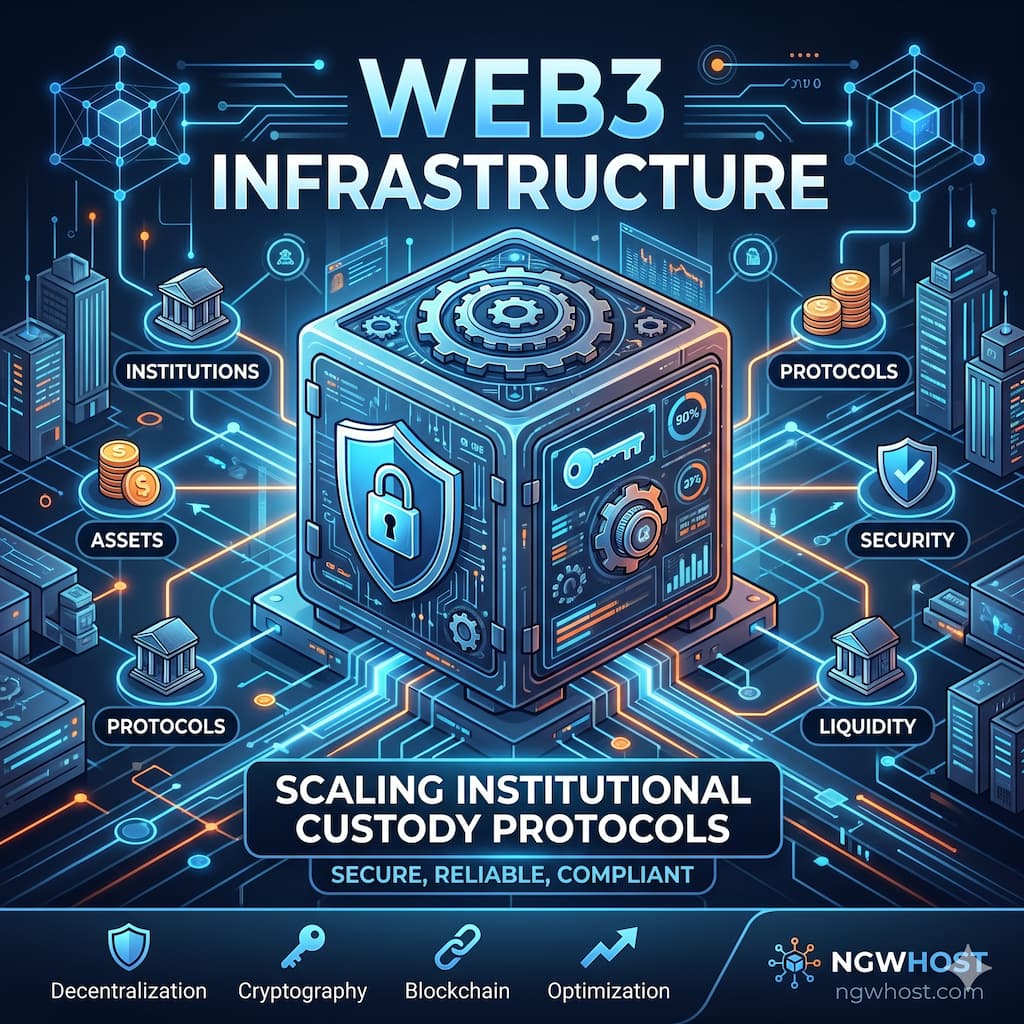
Web3 Infrastructure: Scaling Institutional Custody Protocols
The operational and computational frameworks governing digital asset management, decentralized financial networks, and web3 enterprise infrastructure are confronting a definitive, code-driven transformation. For the past decade, early crypto-native entities and retail participants managed digital asset custody through basic cryptographic parameters—primarily relying on singular private key generation methods, fragmented hardware wallets, and manual air-gapped storage setups. These early architectures functioned within a highly static paradigm, heavily dependent on physical personnel verification, manual offline ledger management, and lengthy manual sign-off intervals to execute ledger settlements.
While this human-centric, siloed custody blueprint provided baseline separation from open-network exploits during early market phases, it introduces severe, non-negotiable systemic risks inside today’s institutional economic ecosystem.
Modern enterprise networks process massive transactional velocities, interface with real-time smart contracts, and manage complex cross-border liquidity lines at speeds that completely overwhelm legacy manual validation methods.
Relying on traditional single-point private key structures or slow-moving offline storage paradigms under this high-velocity reality leaves institutional funds exposed to devastating smart contract configurations, physical credential theft, unauthorized lateral account drift, and catastrophic operational data loss. This tracking delay results in immediate asset drain events, permanent network partition losses, and crippling structural compliance failures that instantly destroy capital and dissolve institutional market trust.
To eliminate this operational friction, lower transaction-latency overhead, and secure an absolute security moat, progressive financial institutions and global enterprise technology leaders are fundamentally overhauling their defensive perimeters. They are abandoning ad-hoc transactional scripts and deploying comprehensive Intelligent Web3 Infrastructure and Institutional Custody Control Planes.
Far from a basic software extension or a simple wallet plug-in, building a production-grade cryptographic management core combines high-throughput multi-source ledger telemetry ingestion, advanced Multi-Party Computation (MPC) cryptographic architectures, automated policy-as-code validation frameworks, and hardware-insulated confidential computing enclaves straight into the core enterprise IT and database system.
1. The Core Paradigm Shift: From Fragmented Key Storage to Continuous Cryptographic Orchestration
To forge a highly resilient web3 infrastructure capable of scaling digital assets safely across multi-jurisdictional cloud environments and decentralized networks, systems architects must fundamentally alter their underlying security management philosophy. The enterprise must migrate away from passive, static asset storage and focus entirely on continuous, automated cryptographic verification and real-time ledger orchestration.
 [Legacy Cold Storage]: Offline Key Vault ──> Manual Human Sign-Off ──> Multi-Hour Settlement Latency
 [Scaled Web3 Core]: Distributed MPC Shards ──> Real-Time Policy-as-Code ──> Sub-Second Enclave Execution
- Legacy Asset Storage Frameworks: Function within a reactive, physically bounded topology. Systems isolate private encryption keys inside physical storage modules or offline data centers, requiring multiple human administrators to manually access, reassemble, and execute transactional data packets, introducing extensive operational latency and single-point failure windows.
- The Automated Custody Fabric: Reconfigures this framework entirely. It establishes a continuous, software-defined data orchestration layer where complete private cryptographic keys are permanently eradicated from the system topology. Instead, mathematical calculations are processed across geographically fragmented nodes using distributed mathematical fractions, ensuring that no single server, employee, or network region ever holds access to a complete signature template, neutralizing threat vectors at the execution boundary.
By executing real-time automated pattern scanning, multi-dimensional permission mapping, and programmatic threshold enforcement right at the transaction generation phase, intelligent web3 networks permanently eliminate security risk latency. The core custody framework moves past its historical role as a lagging manual lockbox. The underlying infrastructure evolves into an active strategic shield engineered to identify network deviations, track capital allocation velocities, and enforce institutional governance parameters weeks before a transactional distortion can impact the balance sheet.
2. Core Pillars of an Institutional Web3 Custody Stack
Constructing an enterprise-grade automated web3 data security and infrastructure platform capable of scaling safely across thousands of distributed asset networks requires a robust technology layer anchored by four foundational engineering pillars.
Pillar I: Multi-Party Computation (MPC) and Threshold Cryptography Engines
The ultimate security integrity of any scaled digital asset architecture and its capacity to prevent unauthorized fund depletion depend entirely on removing single-point attack surfaces across the key management infrastructure.
Systems engineers deploy optimized Multi-Party Computation (MPC) engines anchored by advanced threshold cryptography algorithms (such as threshold ECDSA or EdDSA protocol suites). During the wallet initialization phase, mathematical key shares (or private key shards) are programmatically generated across distributed multi-cloud nodes, institutional partner networks, and internal organizational boundaries concurrently. The nodes execute complex multi-party signing routines to validate outbound transaction payloads without ever revealing, transmitting, or reassembling the base private keys in any single memory location. This framework guarantees that an attacker must compromise a distributed quorum of completely isolated network systems simultaneously to alter a transaction status, rendering single-node data breeches entirely harmless.
Pillar II: Policy-as-Code Transaction Governance Matrices
Modern international corporate enterprise operations require navigating an intricate maze of overlapping department cost centers, decentralized application endpoints, and dynamic spending limits that change dynamically across distributed network environments.
Enterprise technology teams deploy optimized Policy-as-Code Governance Engines built on advanced logical validation frameworks and programmatic smart contract controls. The custody platform routes every single generated transaction payload through an automated validation pipeline before submitting data to the MPC signing network. The system evaluates thousands of distinct operational features simultaneously—including transaction asset volumes, destination address whitelist registries, historical department spending velocities, regional transaction initiation hours, and active user authentication layers. The engine applies these programmatic definitions to enforce corporate compliance rules instantly, automatically blocking unauthorized out-of-bounds transfers or flagged contract interactions without relying on manual administrative intervention queues.
Pillar III: Stochastic Liquidity Simulators and Network Stress Testing
Maintaining an unassailable operational and financial perimeter requires the web3 infrastructure core to continuously evaluate its systemic resilience against sudden, catastrophic decentralized protocol failures or rapid decentralized financial (DeFi) pool dislocations.
The platform integrates advanced Stochastic Simulation Engines that run millions of continuous, automated liquidity-drain, gas-fee spike, and network congestion stress tests over the prospective enterprise portfolio concurrently. The system models how transaction throughput velocities, network fee requirements, settlement finality horizons, and overall portfolio capital adequacy would perform under severe operational and market disruptions: an abrupt validation freeze on a primary layer-1 blockchain, an unexpected smart contract exploit inside an integrated lending protocol, sudden shifts in cross-border stablecoin liquidity, or non-linear gas-price execution anomalies across public networks. If a simulation reveals that an infrastructure path risks trapping capital or breaching safety boundaries, the platform triggers automated rebalancing alerts, allowing risk officers to adjust structural parameters proactively.
Pillar IV: Real-Time Blockchain Telemetry Ingestion and Early Warning Systems
Waiting for traditional end-of-day portfolio auditing reports or trailing accounting ledgers to isolate smart contract exploits or malicious configuration drift exposes the enterprise allocator to massive, unhedged asset drain events during periods of rapid network manipulation.
Operations groups deploy an automated Early Warning System (EWS) connected straight to live blockchain RPC nodes, decentralized mempool networks, and automated oracle data streams across all international infrastructure layers. The framework monitors on-chain behavioral characteristics continuously against adaptive metric thresholds.
If the analytical engine isolates an uncharacteristic anomaly—such as a non-linear drop in a protocol’s total value locked (TVL) combined with an uncharacteristic modification in a decentralized pool’s smart contract state parameters—it triggers an immediate automated protection playbook.
The framework bypasses manual verification queues and executes an automated protection playbook: it programmatically executes an emergency smart contract withdrawal, pauses outstanding capital routing lines to the affected vertical, and alerts the global engineering command center for direct remediation, minimizing the operational blast radius of a web3 network exploit in seconds.
3. High-Performance Optimization: The Web3 Institutional Custody Ledger
Upgrading an enterprise alternative asset framework from uncoordinated manual hardware wallets and offline cold storage setups to an automated, scaled predictive web3 infrastructure architecture fundamentally redefines an organization’s transaction efficiency and security resilience metrics.
| Performance Parameter | Legacy Cold Storage / Hardware Wallets | Scaled Intelligent Custody Infrastructure |
| Transaction Finality Latency | Hours to days; bound by physical human key assembly | Near-instant; sub-second automated ledger execution |
| Key Exposure Vulnerability | High; single points of failure in physical device storage | Zero; private keys never exist as single entities |
| Compliance & Verification Style | Manual checklist reviews and human audit queues | Programmatic; automated real-time Policy-as-Code checks |
| Operational Scalability Matrix | Rigid; highly complex to execute bulk automated calls | High; seamless API orchestration across multi-chain systems |
| Working Capital Utilization Drag | High asset stagnation due to prolonged lockup buffers | Optimized liquidity paths, cutting capital drag up to 45% |
4. Real-World Applications: Institutional Custody in Active Web3 Arenas
Real-Time Asset Protection and Anomaly Defusal in Decentralized Finance (DeFi) Ecosystems
Consider a major multinational financial institution or alternative asset manager that coordinates extensive liquidity allocations across multiple high-yield decentralized finance protocols, tokenized real-world asset (RWA) platforms, and cross-border settlement channels simultaneously. The operational pipeline operates under highly capital-intensive conditions, keeping multi-million-dollar digital liquidity blocks deployed across distinct regional smart contract structures. During an unannounced security event, a critical vulnerability is discovered inside a primary automated market maker (AMM) protocol where the enterprise maintains extensive stablecoin reserves, allowing external malicious actors to initiate an accelerated liquidity-drain exploit.
For an unhedged institutional allocator reliant on traditional, slow-moving manual audit cycles, this sudden smart contract freeze results in immediate private asset degradation. Portfolio managers remain completely blind to the systemic exploit until decentralized pools are fully drained hours later, resulting in significant equity destruction and breached portfolio drawdown boundaries.
The predictive web3 infrastructure completely neutralizes this systemic threat by anchoring its asset core to an automated risk framework. The platform monitors alternative ledger telemetry, mempool transaction velocities, and on-chain protocol state changes continuously.
The moment the quantitative analysis matrix registers the structural exploit pattern within the targeted pool, it computes the non-linear capital impact across the entire public and private portfolio instantly. The platform executes an automated defense playbook: it programmatically routes an automated flash-transaction to withdraw the institutional reserves from the compromised contract, bypasses open network congestion via optimized MEV-boost gas bidding, and secures the digital assets within an internal whitelisted vault automatically. This sub-second intervention preserves portfolio capital stability, prevents asset exposure losses, and enables the institutional investor to navigate tectonic network disruptions smoothly without experiencing devastating liquidity shortfalls.
Proactive Settlement Optimization and Clearing for Multi-Market B2B Commerce Fabrics
A hyper-scale digital merchant distribution platform and e-commerce aggregator processes millions of daily digital micro-transactions, stablecoin settlements, and cross-border subscription payments across distinct global jurisdictions. To maintain maximum liquidity efficiency, the corporation’s central treasury must continuously pool excess capital from regional operating networks back into its centralized funding center to execute short-term investments or optimize corporate debt management.
The corporation stabilizes its operational margins and eliminates currency fragmentation by anchoring its payment processing grid to an automated web3 custody infrastructure. The platform connects directly to active payment gateways, corporate ERP ledgers, and central blockchain networks via secure enterprise APIs.
Using advanced time-series forecasting models and automated smart-contract sweeps running continuously, the system projects regional funding requirements and settlement volumes weeks ahead with high mathematical precision.
If the model flags a capital surplus within a European or Latin American subsidiary, the system automatically triggers a programmatic asset sweep.
The engine pools the local revenue assets, executes real-time digital asset conversions via automated smart order routing at lowest possible institutional execution rates, and rebalances the central corporate custody vault programmatically in minutes instead of days. This lifecycle automation cuts transaction processing costs by over 85%, completely eliminates the need to maintain expensive, idle bank-clearing channels, and maximizes daily capital utility for the enterprise.
5. Security Architecture for Hardened Web3 Infrastructure Control Planes
Centralizing global distributed key shares, integrating live blockchain network APIs, tracking predictive allocation models, and automating programmatic fund transfers introduces intense data privacy and infrastructure security requirements. Because advanced web3 custody platforms manage the direct movement of global corporate digital assets and hold highly sensitive private metadata, they represent primary targets for advanced persistent threat actors, state-sponsored cyber-warfare organizations, and sophisticated financial exploitation syndicates.
Implementing Anonymized Data Tokenization across Ledger Pipelines
To feed predictive analytical models, evaluate cost-factor simulations, and execute large-scale lookalike resource usage clustering safely without violating international data privacy directives (such as GDPR or CCPA) or exposing proprietary corporate metadata to external observers, organizations must implement a robust data perimeter.
Systems architects deploy an automated data tokenization proxy directly at the front edge of the ledger analytics data ingestion factory. Before any system log, balance sheet ledger snapshot, or on-chain transaction record is written to the central predictive data lakehouse, all sensitive internal team identifiers, proprietary system names, and specific corporate account codes are automatically extracted, cryptographically hashed, and replaced with secure tokens. The underlying machine learning engines and data analytics applications execute their pattern-recognition optimization calculations strictly over anonymized operational data and firmographic indicators, maintaining total utility while ensuring absolute corporate confidentiality across all regional entities.
Hardening the Quantitative Core via Enclave Isolation and Hardware Security Modules
Because the centralized web3 infrastructure optimization core commands the absolute authority to analyze funding needs, alter capital structure strategies, and execute automated cryptographic signing via alternative routes, accessing this administrative engine requires extreme security constraints.
- Enclave Isolation: Isolate the entire quantitative modeling core, optimization databases, and API configuration consoles inside a strict Zero-Trust Network Access (ZTNA) envelope. Every corporate analyst account, data-scientist terminal, and internal software integration must clear continuous multi-factor authentication, rigorous automated behavioral risk screening, and endpoint device posture assessments before gaining access to the platform interface.
- Hardware Isolation Core: The distributed MPC processing nodes, cryptographic signing libraries, and policy-as-code evaluation engines must execute exclusively within hardware-isolated Confidential Computing Enclaves integrated with physical Hardware Security Modules (HSMs) equipped with hardware-level memory encryption. This framework keeps all enterprise key shares, configuration logs, and transaction processing routines completely insulated from unauthorized lateral access, host-level interception, internal insider threats, or external data exploitation throughout the execution lifecycle.
6. Regulatory Convergence: Adhering to Global Digital Asset Compliance Standards
Scaling a comprehensive web3 institutional custody and infrastructure platform across international borders requires absolute alignment with an evolving framework of international corporate governance, institutional financial compliance mandates, and data transparency standards.
- The MiCA Framework (European Union): Enforcing strict operational parameters across all EU member states, MiCA mandates clear structural guidelines for digital asset service providers, institutional custody standards, and platform transparency, establishing a predictable compliance pathway for European enterprise capital deployment.
- The AICPA Trust Services Criteria (SOC 2 Type II): Rigorous international auditing frameworks demand that high-growth digital asset funds, custody networks, and web3 infrastructure platforms implement and present verifiable operational safety metrics, continuous log tracking pipelines, and automated access governance histories across all active computing environments.
- The FATF Travel Rule Guidelines: International financial action task forces dictate explicit transaction tracking, origin data verification, and user identity reporting mandates for all digital asset movements exceeding defined value thresholds, forcing enterprise networks to deploy real-time compliance validation layers and automated cryptographic audit trails across all active digital registries.
Read More⚡ Private Equity: Navigating Cross-Border Tech Buyout Strategy
Conclusion: Orchestrating the Unassailable Web3 Enterprise Fabric
The deployment and scaling of a modern, data-driven web3 infrastructure and institutional custody control plane is not an optional technology optimization project for forward-looking enterprise IT; it is a fundamental technological requirement to navigate tomorrow’s hyper-connected, high-velocity economic landscape. The legacy methodology of managing multi-region digital assets and decentralized financial networks through unoptimized manual hardware wallets and trailing point-in-time spreadsheet reviews—while tolerating severe calculation latencies, single-point credential exposures, and high operational transaction friction—is an unsafe operational approach that invites capital stagnation, asset exposure, and balance-sheet erosion.
By engineering an integrated, forward-looking software fabric built on high-throughput MPC threshold cryptography mechanisms, automated policy-as-code validation frameworks, stochastic portfolio stress-testing engines, and real-time automated telemetry ingestion playbooks, progressive enterprise leaders transform their web3 operations from passive administrative bottlenecks into high-performance strategic weapons.
Ultimately, the definitive advantage in the global digital ecosystem belongs entirely to the visionary enterprises that can evaluate network anomalies, optimize digital transactions, and deploy corporate assets as fast as the market moves—mastering advanced web3 infrastructure and custody frameworks to drive secure, highly predictable, and market-leading global scale across any operational horizon.
Deploying computationally intensive MPC threshold signing engines, high-throughput permissioned ledger analytics lakehouses, real-time capital structure optimization models, and ultra-secure automated asset protection frameworks requires world-class, zero-downtime server infrastructure. Secure your company’s digital web3 core on an unassailable infrastructure foundation by exploring the premium enterprise hosting configurations at ngwhost.com.