Why Retail Investors are Flocking to Private Equity
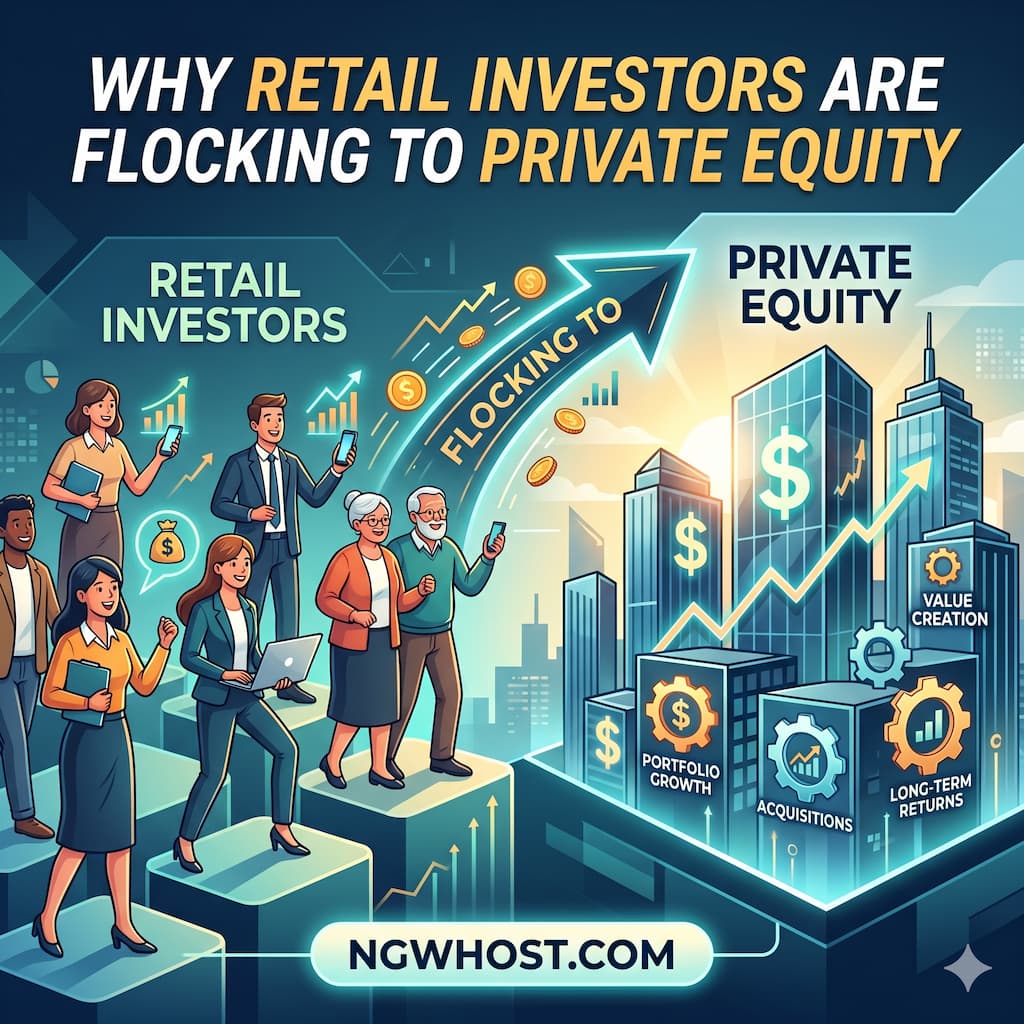
The landscape of high-finance is undergoing a seismic shift in 2026. For decades, the “ivory towers” of Private Equity (PE) were reserved exclusively for institutional giants—pension funds, sovereign wealth funds, and the ultra-high-net-worth individuals known as the “1%.” The average retail investor was left with the public markets: stocks, bonds, and ETFs.
However, the gates are being torn down. As we move through the second quarter of 2026, we are witnessing a massive migration. Retail investors are no longer content with the volatility and “index-hugging” returns of the S&P 500. They are looking for alpha, and they are finding it in Private Equity.
In this deep dive, we’ll explore the factors driving this trend, the democratization of alternative assets, and what you need to know before shifting your capital into the private sphere.
The Death of the “60/40” Portfolio
For over forty years, the gold standard of investing was the 60/40 portfolio—60% stocks and 40% bonds. It was designed to provide growth while offering a cushion during market downturns.
But the 2020s broke that model. High inflation, followed by the rapid interest rate hikes of 2023-2024, showed that stocks and bonds can move in the same direction (down) simultaneously. Retail investors realized they were over-exposed to public market sentiment and under-exposed to real-world assets.
The Search for “Alpha” in a Saturated Market
Public markets have become hyper-efficient. With high-frequency trading and AI-driven algorithms, finding an undervalued stock is like looking for a needle in a haystack. Private Equity, however, operates in a different realm. PE firms buy private companies, optimize their operations, and sell them for a profit years later. This “hands-on” approach creates value that isn’t just tied to a ticker symbol’s daily fluctuation.
Why Now? The Catalyst of 2026
If Private Equity has always been lucrative, why are retail investors only flocking to it now? The answer lies in a perfect storm of regulatory changes and technological innovation.
1. The Democratization of Access
Previously, the barrier to entry for a PE fund was a $5 million to $10 million minimum investment. Today, platforms like Moonfare, Yieldstreet, and several blockchain-based tokenization protocols have lowered that barrier to as little as $10,000. These platforms aggregate retail capital to meet the institutional minimums of top-tier funds like Blackstone, KKR, and Carlyle.
2. Regulatory Thaw
The SEC and international regulators have gradually eased the definitions of “Accredited Investors.” Recognizing that many retail investors are sophisticated enough to understand risk, new rules allow individuals to participate in private placements based on professional certifications or lower income thresholds than were required a decade ago.
3. The “Private for Longer” Trend
Companies are staying private much longer than they used to. In the 1990s, a tech company might go public after 4 or 5 years. Today, companies like SpaceX or Stripe remain private for over a decade. By the time a company hits the IPO (Initial Public Offering) stage, the “explosive” growth has often already happened. Retail investors realized that to capture the 10x or 50x returns, they have to get in before the ticker symbol exists.
The Core Appeal: Why PE Wins
What exactly is pulling the money away from traditional brokerage accounts? It boils down to three pillars: Diversification, Lower Volatility, and Superior Returns.
Diversification Beyond the S&P 500
The S&P 500 is increasingly dominated by a handful of tech giants. If you own a standard index fund, you are essentially betting on five or six companies. Private Equity allows investors to diversify into “real economy” sectors: manufacturing, healthcare technology, green energy infrastructure, and logistics. These businesses don’t always react to the Fed’s interest rate decisions or a sudden tweet from a Silicon Valley CEO.
The Volatility “Smoothing” Effect
Public stocks are priced every second. This leads to emotional selling during market dips. Private Equity assets are valued quarterly or annually. This lack of daily liquidity creates a “smoothing” effect on a portfolio. For the long-term investor, not seeing your net worth drop 5% on a Tuesday because of a bad jobs report is a psychological advantage that prevents costly investment mistakes.
Historical Outperformance
Historically, Private Equity has outperformed the public markets by several percentage points annually over long horizons. While past performance is no guarantee of future results, the ability of PE managers to force operational changes—such as cutting costs, replacing management, or merging companies—provides a lever for growth that a passive stock investor simply doesn’t have.
The Risks: What the Brochures Don’t Tell You
While the migration to PE is exciting, it is not without peril. Retail investors must understand the “trade-offs” involved in private markets.
1. The Liquidity Trap
In a standard brokerage account, you can sell your Apple stock and have cash in your bank account in 48 hours. In Private Equity, your money is “locked up” for 7 to 10 years. This is known as the J-Curve. In the first few years, your investment might actually show a loss due to management fees and the time it takes to restructure companies. You cannot exit early if you suddenly need the cash for a house or an emergency.
2. The Fee Structure
Private Equity is famous for its “2 and 20” fee structure: a 2% annual management fee and a 20% performance fee (carried interest) on profits. While platforms have lowered the entry price, the fees remain significantly higher than a 0.03% expense ratio on a Vanguard ETF. The outperformance must be significant enough to cover these costs.
3. Transparency Issues
Public companies are required by law to file quarterly reports and disclose every major move. Private companies are under no such obligation. You are, to a large extent, trusting the PE fund managers to make the right calls behind closed doors.
How to Get Started: The Retail Roadmap
If you are considering joining the “flock” toward private equity, here is the strategic approach for 2026:
- Assess Your Liquidity: Only invest capital that you are 100% certain you will not need for the next decade. Private Equity should represent no more than 10% to 20% of a well-balanced portfolio.
- Choose the Right Vehicle: Look into Interval Funds or Business Development Companies (BDCs). These are “hybrid” vehicles that offer some exposure to private assets but provide limited liquidity (e.g., the ability to sell back 5% of your shares every quarter).
- Vet the Platform: Not all fintech platforms are created equal. Research the track record of the platform’s founders and the specific funds they offer. Are they giving you access to “Tier 1” funds, or are they the “leftovers” that institutional investors didn’t want?
- Understand the Tax Implications: Private equity investments often involve K-1 tax forms rather than 1099s. This can add complexity (and cost) to your annual tax filing.
The Future: AI and the Tokenization of Private Equity
As we look toward the rest of 2026 and 2027, the trend is only going to accelerate. The integration of AI is allowing PE firms to identify acquisition targets faster and manage them more efficiently.
Furthermore, the “Tokenization” of private assets is the next frontier. By putting private equity shares on a blockchain, investors may soon be able to trade their “locked” positions on secondary markets, solving the liquidity problem once and for all. When that happens, the distinction between “public” and “private” investing will blur even further.
Read More⚡ 2026 Housing Market: Is it Time to Buy or Wait?
Conclusion
The flocking of retail investors to Private Equity is more than just a trend; it’s a maturation of the global financial system. The “retailization” of alternatives is giving the individual investor the same tools that billionaires have used to grow their wealth for generations.
However, with great power comes great responsibility. The 2026 market rewards the disciplined and the patient. If you can handle the illiquidity and the complexity, Private Equity offers a path to wealth creation that the public stock market can no longer guarantee.
At ngwhost.com, we believe that staying informed is the first step to financial sovereignty. Whether you are hosting a financial blog or managing a portfolio, the tools of the future are within your reach.
Disclaimer: This article is for informational purposes only and does not constitute financial advice. Private Equity involves significant risk and illiquidity. Always consult with a certified financial advisor before making major investment decisions.