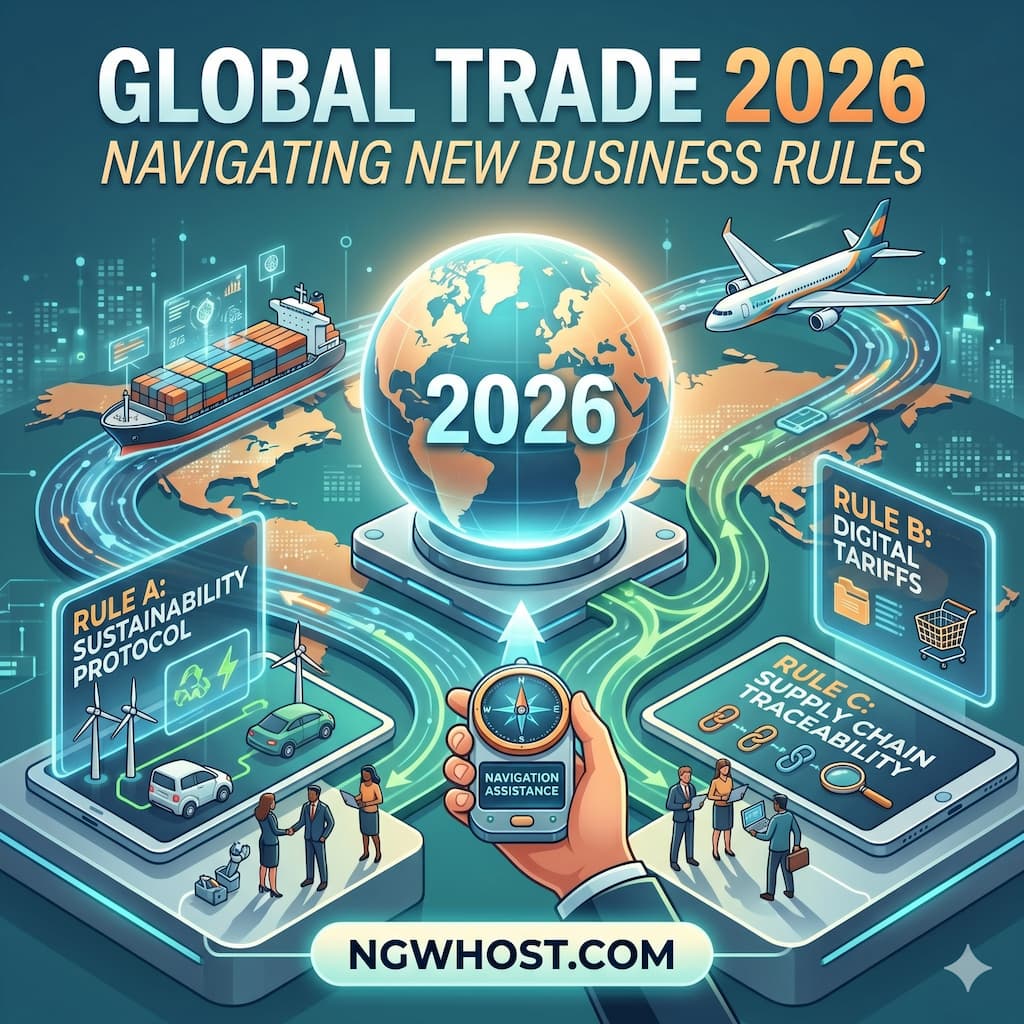
Global Trade 2026: Navigating New Business Rules
In 2026, the age of “globalization by default” has officially ended. In its place, a more complex, fragmented, and digitally-driven era of trade has emerged. As of April 2026, businesses at ngwhost.com and beyond are finding that the old rules of shipping goods across borders are being rewritten by geopolitical shifts, carbon taxes, and artificial intelligence.
Navigating this “New Normal” requires more than just logistical efficiency; it requires a deep understanding of the regulatory hurdles that didn’t exist two years ago. This guide explores the pivotal changes in global trade for 2026 and how your business can stay compliant and competitive.
The 2026 Trade Landscape: Fragmentation and Blocs
One of the most defining characteristics of 2026 is Geopolitical Fragmentation. Global trade is no longer a single, unified highway. Instead, it has split into regional and ideological “trade blocs.”
1. The Rise of “Friend-Shoring” and Regionalism
In 2026, market access has become conditional. Countries are increasingly trading within political blocs. For example, the EU-Mercosur Agreement, which was provisionally ratified earlier this year, has effectively turned the Atlantic into a preferential trade zone between Europe and South America. Meanwhile, tensions in the Arctic and Pacific have led to shifting tariff structures that favor “friendly” nations over the most cost-efficient ones.
2. The US “Section 232” Expansion
A major shock to global trade in early 2026 was the US government’s expansion of Section 232 tariffs. Historically applied to steel and aluminum, these tariffs now include copper-containing products and even certain advanced semiconductors.
- The “Full Value Rule”: In a departure from past policy, tariffs are now often applied to the entire value of a finished product (like an electric vehicle or a server) if it contains a threshold amount of sanctioned metal, rather than just the raw material cost.
Green Trade: The Carbon Border Adjustment Mechanism (CBAM)
Perhaps the most significant “New Business Rule” of 2026 is the full implementation of the EU’s Carbon Border Adjustment Mechanism (CBAM). As of January 2026, CBAM has moved out of its transition phase and into its definitive phase.
How CBAM Works in 2026
If your business exports carbon-intensive goods—specifically steel, aluminum, cement, fertilizers, hydrogen, or electricity—into the European Union, you are now required to:
- Register as an authorized declarant.
- Report embedded emissions: You must provide verified data on the direct and indirect greenhouse gas (GHG) emissions generated during the production of your goods.
- Purchase CBAM Certificates: To level the playing field with EU producers who pay for carbon under the Emissions Trading System (ETS), importers must pay a “carbon price” at the border.
Strategic Tip: Businesses that can prove a lower carbon footprint through “Digital Product Passports” (DPPs) are seeing a significant competitive advantage, as they pay lower levies at the border.
The AI Revolution in Trade Compliance
The sheer volume of transactions in 2026 has made manual compliance impossible. With e-commerce continuing to explode and the removal of many “de minimis” (low-value) exemptions in 2025, customs authorities are now processing millions of parcels daily.
AI-Driven Customs and Risk Detection
Authorities like the US Customs and Border Protection (CBP) and EU Customs are now using Generative AI and Machine Learning to scan manifests in milliseconds.
- Pre-arrival Data: Data must now be complete before the goods even leave the port of origin. AI models flag discrepancies in Harmonized System (HS) codes, valuation, and country of origin instantly.
- Automated Audits: Gone are the days of random manual checks. AI identifies patterns of “forced labor” risk or “tariff evasion” by cross-referencing global shipping data, making it harder for non-compliant businesses to hide.
Why Your Business Needs AI Tools
To survive in 2026, your trade team must use AI to:
- Auto-classify HS Codes: AI can analyze product descriptions and technical specs to suggest the correct tariff code, reducing the risk of fines.
- Predict Logistics Delays: AI models can now forecast port congestion based on weather, strikes, and geopolitical events, allowing you to re-route cargo proactively.
Due Diligence: The New Corporate Social Responsibility
2026 marks a turning point for supply chain transparency. The Corporate Sustainability Due Diligence Directive (CSDDD) and similar laws in the UK and Canada have shifted the burden of proof onto the importer.
Beyond Tier One
It is no longer enough to know who your direct supplier is. Under the 2026 rules, businesses must have visibility into Tier 2 and Tier 3 suppliers.
- Forced Labor Enforcement: Authorities are moving beyond simple “letters of attestation.” They now require transaction-level traceability—proof of where every raw material was mined or harvested.
- The Circular Economy Act: New regulations in 2026 encourage (and sometimes mandate) the use of recycled materials, requiring businesses to track “end-of-life” disposal plans for the products they sell.
Navigating Tariffs: A 2026 Regional Summary
| Trade Route | Current Status (April 2026) | Key Rule to Watch |
| US to EU | Tense but Functional | EU-US Trade Deal suspended; look for “reciprocal tariffs” on tech. |
| EU to Mercosur | Expanding | Provisional 0% tariffs on 80% of industrial goods. |
| China to Global | Highly Regulated | Increased scrutiny on EVs and semiconductors; “China+1” strategy is now the standard. |
| India to Canada/EU | Growth Phase | New Comprehensive Economic Partnership Agreements (CEPA) nearing finalization. |
5 Strategies for Trade Success in 2026
To help your business navigate these new rules, consider implementing these five pillars:
1. Build a “Digital Twin” of Your Supply Chain
Use mapping software to visualize every node in your supply chain. This is the only way to comply with the new due diligence and carbon reporting laws of 2026.
2. Centralize Trade Data
Break down the silos between your logistics, legal, and tax departments. In 2026, a mistake in your tax classification can lead to a seizure of your logistics shipment.
3. Focus on Origin Management
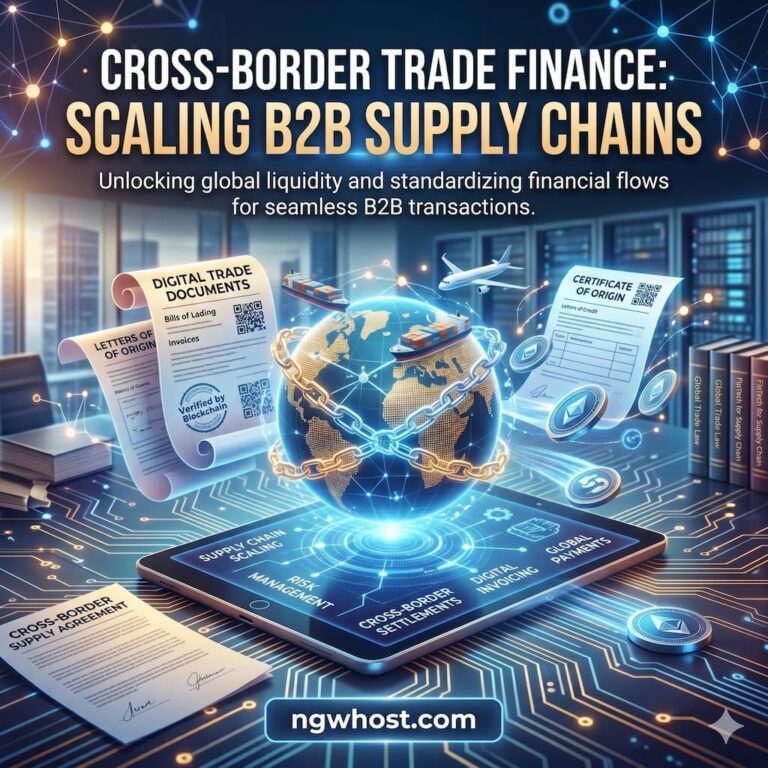
With “Section 232” expansion and regional blocs, the Country of Origin is your most important data point. Ensure your suppliers can provide “Certificates of Origin” that are verified via blockchain or secure digital signatures to avoid delays.
4. Invest in “Explainable AI”
While AI is necessary, “black box” decisions are a liability. Use AI tools that provide a clear rationale for their classifications, so you can defend your filings during a customs audit.
5. Monitor “Sanctions-as-a-Service”
Sanctions lists are changing daily in 2026 due to the Greenland sovereignty dispute and other geopolitical flashpoints. Subscribe to real-time screening services that integrate directly into your ERP (Enterprise Resource Planning) system.
Read More⚡ Use AI for Tax Optimization: Legal Business Strategies
Conclusion: The Resilience Premium
In 2026, the businesses that win aren’t necessarily the ones with the lowest costs, but the ones with the most resilient and compliant trade networks. The “New Business Rules” are designed to favor transparency, sustainability, and geopolitical alignment.
By embracing AI, preparing for carbon taxes like CBAM, and mapping your supply chain to its roots, you can turn these regulatory hurdles into a competitive moat. At ngwhost.com, we are committed to helping you scale your digital and physical infrastructure to meet the demands of this brave new trade world.