The Impact of Digital Currencies on Global Banking Systems
The Dawn of a New Financial Era
For centuries, the global banking system has operated on a relatively static fundamental premise: centralized institutions act as the ultimate arbiters of trust, facilitating the movement, storage, and lending of fiat currency. However, as we navigate through 2026, the proliferation of digital currencies has triggered a seismic shift in this paradigm. What began over a decade ago as a cypherpunk experiment with Bitcoin has metastasized into a sophisticated, multi-trillion-dollar digital asset ecosystem that is fundamentally rewriting the rules of global finance.
The impact of digital currencies on the traditional banking sector is no longer a theoretical debate about the future; it is a present-day operational reality. From Wall Street to emerging markets, digital currencies are simultaneously presenting an existential threat to legacy banking models and offering unprecedented opportunities for technological modernization.
This comprehensive analysis for ngwhost.com explores the profound impact of digital currencies on global banking systems. We will dissect the different classifications of digital money, analyze how they are disrupting legacy operations like cross-border payments, examine the looming threat of bank disintermediation, and explore the robust server and hosting infrastructure required to power this new financial revolution.
Understanding the Digital Currency Ecosystem
To grasp the impact on traditional banks, we must first categorize the digital currency landscape, as different types of digital assets interact with the banking system in vastly different ways.
1. Decentralized Cryptocurrencies (Bitcoin, Ethereum)
These are the pioneers. Cryptocurrencies like Bitcoin (BTC) and Ethereum (ETH) operate on public, permissionless blockchains. They are fundamentally decentralized, meaning no central bank, government, or corporation controls their issuance or network. For traditional banks, these represent a parallel financial system—an alternative store of value and medium of exchange that operates entirely outside the traditional fiat rails.
2. Stablecoins
Stablecoins bridge the gap between the volatility of pure cryptocurrencies and the stability of fiat money. Assets like Tether (USDT) or USD Coin (USDC) are pegged 1:1 to traditional currencies (like the US Dollar) and are typically backed by reserves of cash and short-term government debt. Stablecoins have become the de facto liquidity engines of the digital economy, allowing users to transact globally on blockchain networks without exposing themselves to wild price fluctuations.
3. Central Bank Digital Currencies (CBDCs)
CBDCs represent the traditional banking sector’s ultimate countermeasure. A CBDC is a digital form of a country’s sovereign currency, issued and regulated directly by the nation’s central bank. Unlike decentralized crypto, a CBDC is highly centralized. Major economies are aggressively developing or rolling out CBDCs (such as the Digital Yuan or the Digital Euro) to modernize their payment systems, increase financial inclusion, and retain sovereign control over the monetary supply in the digital age.
The Disruption of Traditional Banking Operations
The most immediate and visible impact of digital currencies is the severe disruption of legacy banking operations, particularly in areas where traditional banks have historically enjoyed lucrative monopolies.
Cross-Border Payments and Remittances
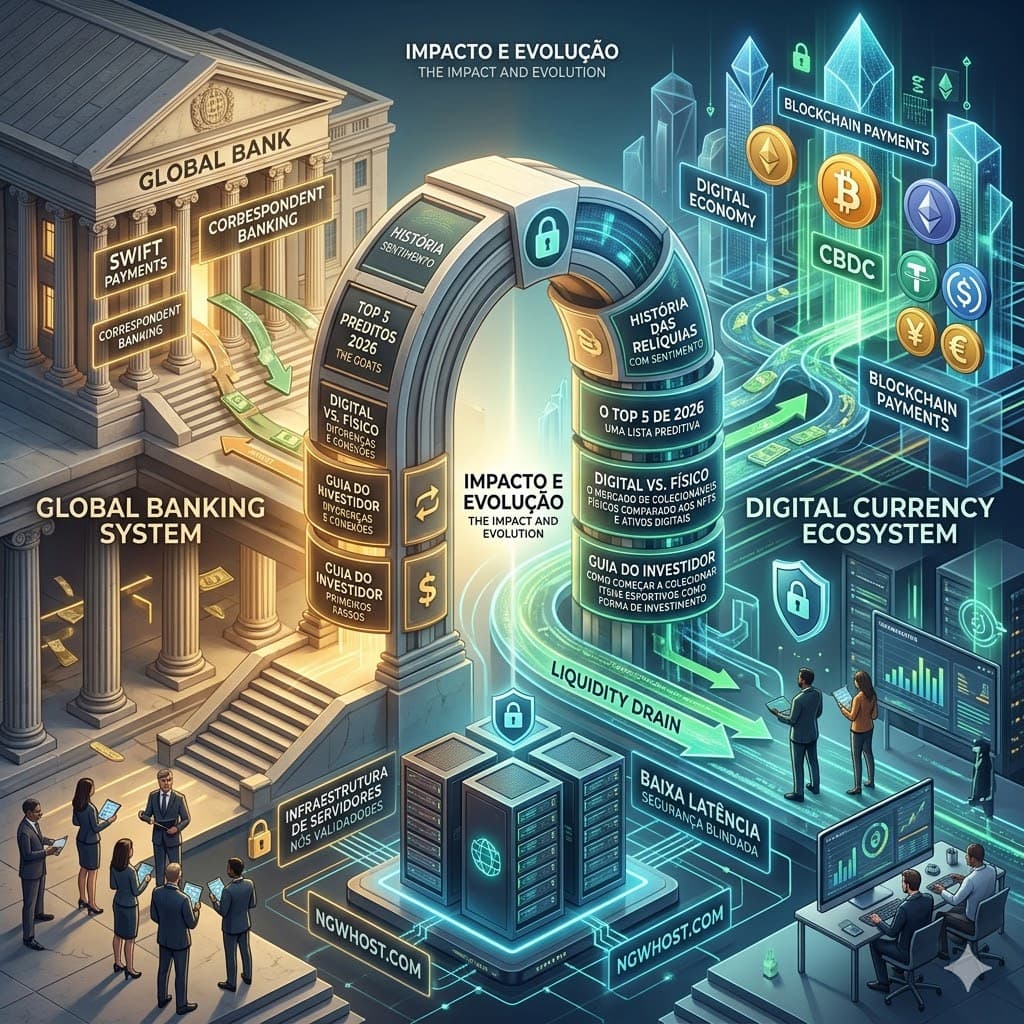
Historically, sending money internationally has been a slow, expensive, and opaque process. It relies on the SWIFT network and a complex web of correspondent banks, where funds must hop through multiple institutions (Nostro and Vostro accounts), each taking a fee and adding processing time. A standard international wire transfer can take anywhere from two to five business days to settle.
Digital currencies have completely upended this model. Using stablecoins or native blockchain networks, an individual or corporation can send millions of dollars across the globe in a matter of seconds, 24/7/365, for a fraction of a cent. This frictionless transfer of value bypasses the correspondent banking network entirely, threatening billions of dollars in fee revenue that traditional banks have relied upon for decades.
Smart Contracts and the Automation of Trust
Ethereum and other advanced blockchains introduced the concept of “Smart Contracts”—self-executing code where the terms of the agreement are written directly into the blockchain.
In traditional banking, complex transactions like trade finance, escrow services, and syndicated loans require armies of lawyers, compliance officers, and clearinghouses to verify conditions and release funds. Smart contracts automate this entire trust layer. If “Condition A” is met (e.g., a shipping container is verified via IoT sensors as arriving at a port), “Payment B” is instantaneously and automatically released. This reduces counterparty risk, eliminates administrative overhead, and cuts the traditional banking middleman out of complex financial workflows.
The Existential Threat of Disintermediation
While lost transaction fees are painful, the deeper, more structural threat to global banking is disintermediation—the process of cutting out the financial middleman entirely.
The Retail Banking Dilemma
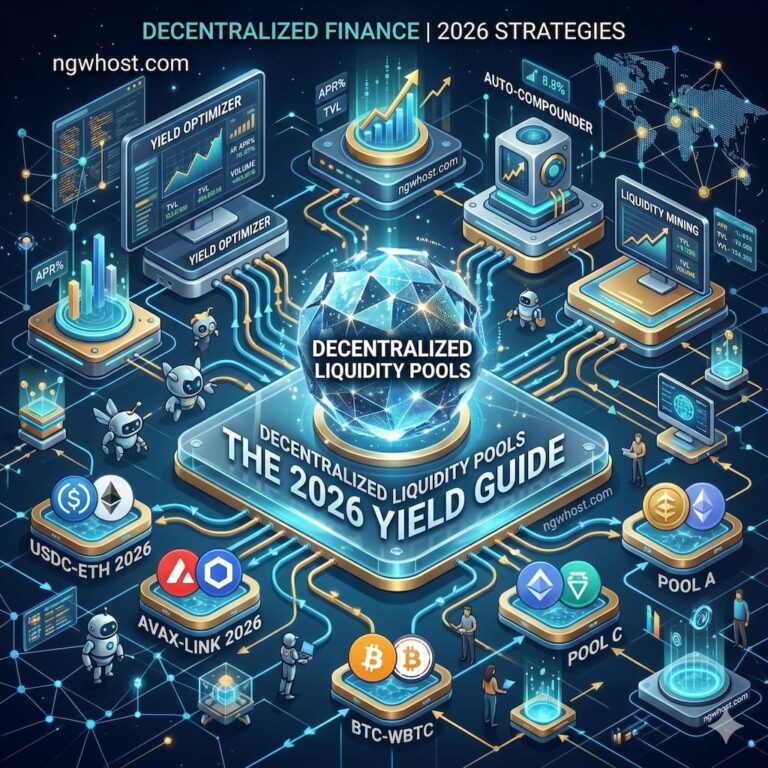
Commercial banks rely on customer deposits to fund their lending operations. They take in deposits at a low interest rate and lend them out at a higher rate, capturing the spread. However, the rise of Decentralized Finance (DeFi) protocols allows individuals to lend their digital assets directly to borrowers through liquidity pools, earning yields that vastly outperform traditional savings accounts.
The CBDC Liquidity Drain
The most profound disintermediation threat actually comes from governments themselves via CBDCs. If a central bank issues a retail CBDC that allows everyday citizens to hold their digital dollars or euros directly in a digital wallet provided by the central bank, the need for a retail commercial bank diminishes drastically.
If consumers move their deposits en masse from commercial banks (like Chase or Barclays) into direct central bank wallets for the sake of perceived safety or governmental incentives, commercial banks will face a massive liquidity crisis. Without a robust base of retail deposits, their ability to issue mortgages, business loans, and consumer credit would be severely crippled, potentially causing a contraction in the broader credit economy.
How Global Banks Are Fighting Back (And Adapting)
Traditional financial institutions are not standing idly by as their business models are dismantled. After a period of initial skepticism and hostility toward digital assets, global banks are now aggressively adapting, pivoting from competitors to active participants in the digital currency space.
Developing Proprietary Blockchain Solutions
Rather than relying on public blockchains, major banks are building their own permissioned, enterprise-grade distributed ledger technologies (DLTs). A prime example is J.P. Morgan’s JPM Coin and their Onyx network. These proprietary systems allow institutional clients to settle cross-border payments and transfer value instantaneously using blockchain architecture, but within a closed, heavily regulated environment controlled by the bank.
Custodial Services for Digital Assets
As institutional investors (hedge funds, pension funds, family offices) demand exposure to Bitcoin and other digital assets, they require institutional-grade security. They cannot rely on consumer-level hardware wallets. Traditional banks, which have centuries of experience in securely holding physical assets, are leveraging this reputation to become heavily regulated custodians for digital assets. Offering digital asset custody, prime brokerage, and trading desks provides a massive new revenue stream for traditional banks.
Tokenization of Real-World Assets (RWAs)
Banks are realizing that the underlying technology of digital currencies—blockchain—can be applied to traditional finance. We are seeing a massive push toward the tokenization of Real-World Assets (RWAs). Banks are turning traditional assets like government bonds, real estate, and private equity funds into digital tokens on a blockchain. This increases the liquidity of traditionally illiquid assets, allows for fractional ownership, and enables instantaneous, 24/7 settlement of legacy financial instruments.
Regulatory Frameworks and the Geopolitics of Money
The integration of digital currencies into the global banking system is heavily dictated by international regulation and geopolitical maneuvering.
The Race for the Digital Reserve Currency
The US Dollar has been the world’s undisputed reserve currency since World War II, giving the United States immense geopolitical power and control over the global financial system (primarily through sanctions). However, the rise of sovereign digital currencies threatens this hegemony.
Nations seeking to bypass US sanctions are actively developing cross-border CBDC networks (such as the mBridge project involving China, the UAE, and others) that allow for direct, bilateral trade settlement in digital currencies, completely bypassing the dollar and the Western-controlled SWIFT network. The global banking system is fracturing into distinct digital currency blocs, fundamentally altering the geopolitics of money.
Compliance, AML, and the Privacy Debate
For traditional banks integrating with public cryptocurrencies, compliance is the greatest hurdle. Anti-Money Laundering (AML) and Know Your Customer (KYC) regulations require banks to know the exact origin and destination of all funds.
Public blockchains are pseudonymous, creating friction for compliance officers. Banks are heavily investing in blockchain analytics tools (like Chainalysis) to trace the provenance of digital assets, ensuring they do not process funds linked to illicit activities. Simultaneously, there is a fierce global debate regarding the privacy implications of CBDCs, as a fully implemented retail CBDC could theoretically give a central government real-time visibility into every single transaction made by its citizens.
The Infrastructure Demand for Digital Finance
As the global banking system transitions toward blockchain networks, digital asset custody, and tokenization, the underlying technical infrastructure requirements are exploding. This is a critical factor for platforms like ngwhost.com and the broader web hosting industry.
Why Hosting Architecture Matters More Than Ever
Running a global financial system on distributed ledgers requires immense computational power, rock-solid reliability, and ultra-low latency.
- Validator Nodes and VPS Infrastructure: Blockchain networks are maintained by validator nodes that must be online 24/7 to process transactions and secure the network. Financial institutions and independent validators require high-performance Virtual Private Servers (VPS) and dedicated bare-metal servers to run these nodes without downtime. A server failure for a validator can result in financial penalties (slashing) and network instability.
- Ultra-Low Latency for High-Frequency Trading: As digital asset markets mature, algorithmic and high-frequency trading (HFT) have become dominant. Trading firms require servers co-located near major crypto exchange data centers, demanding high-bandwidth, low-latency infrastructure to execute trades in milliseconds before market conditions change.
- Ironclad Security: The servers hosting digital asset wallets, cryptographic keys, and exchange backends are the primary targets for the world’s most sophisticated cybercriminals. Hosting providers catering to the FinTech space must offer DDoS protection, advanced hardware firewalls, physical data center security, and completely isolated environments to prevent catastrophic breaches.
The financial revolution is software-driven, but it must be grounded in physical server infrastructure. The banks and FinTech companies that win the next decade will be those that partner with robust, secure, and scalable hosting environments.
Read More⚡ How to Build a Diversified Investment Portfolio with Low Risk
Conclusion: The Hybrid Future of Global Finance
The impact of digital currencies on the global banking system is irreversible. The era of five-day settlement times, exorbitant cross-border fees, and complete monopolistic control over the flow of capital is ending.
However, the idea that traditional banks will simply vanish, replaced entirely by decentralized algorithms, is a flawed, maximalist fantasy. The future of global finance in 2026 and beyond is decidedly hybrid.
We are witnessing the convergence of two worlds. The traditional banking system is absorbing the efficiency, speed, and programmable nature of blockchain technology. Simultaneously, the digital currency ecosystem is being forced to adopt the regulatory compliance, institutional security, and consumer protections that traditional banks have refined over centuries.
Digital currencies have not destroyed the global banking system; rather, they have forced its greatest evolutionary leap in modern history. The institutions that adapt, heavily investing in their technological infrastructure and embracing digital asset custody and tokenization, will thrive as the new architects of a borderless, instantaneous digital economy.